


Fall foliage in New York City arrives late and leaves fast.
The city runs two to four weeks behind the mountains, and once the color turns it holds for maybe ten days before a hard autumn rain takes most of it down. Go too early and the canopy is still mostly green; go too late and you get bare branches. Below is when peak foliage actually lands in the city, which canopies are worth the trip, and where to see the whole thing from above.
For what is opening and worth showing up for each week, sign up for The Center Newsletter.
When New York’s Leaves Actually Change
Peak color in New York City usually lands in the last week of October and holds into early November. That’s a few weeks behind upstate New York, where the Adirondacks typically peak from late September into early October, followed by the Catskills and Hudson Valley in mid to late October. By the time the mountains are bare and the leaf peepers have gone home, the city is just getting good.
The lag is a function of the city itself. Buildings hold heat overnight and throw shade across the parks by day, which slows the temperature drop that tells a tree to stop making chlorophyll. Central Park, ringed by towers on three sides, turns later than almost anywhere else in the five boroughs.
Check a tracker before you commit to a weekend. New York State publishes a weekly fall foliage report by region, and the Central Park Conservancy runs its own, which is more useful inside the city because it follows specific landscapes rather than whole counties.
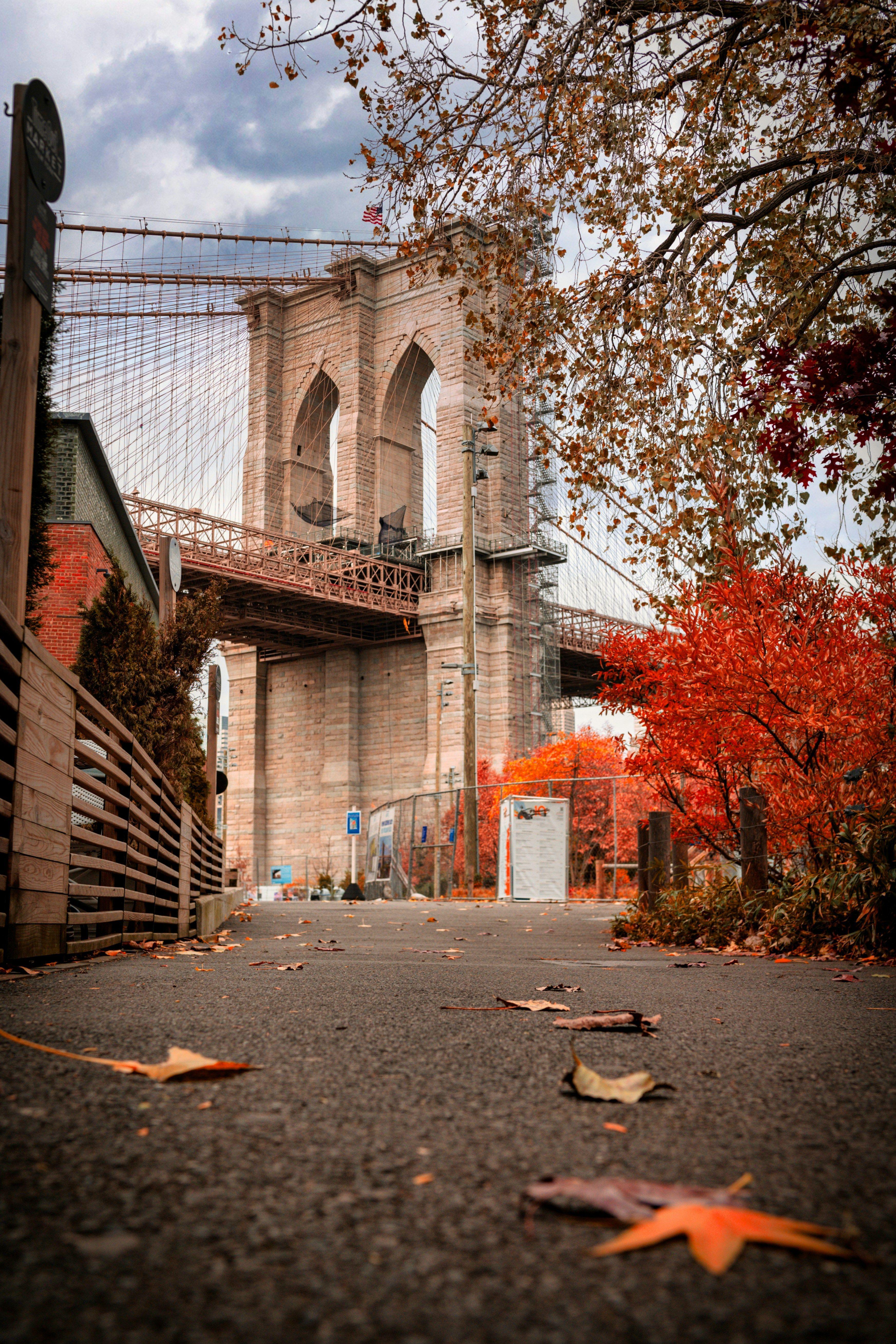
Central Park Does the Heavy Lifting
The park holds roughly 18,000 trees, and in a good year they do not all turn at once, which is what makes it worth more than one visit.
The Mall and Literary Walk is the postcard. Four rows of American elms, one of the largest remaining stands in North America, arch over the promenade and turn a flat, even yellow that reads like light through a ceiling. It photographs best in the late morning, before the crowd thickens at the Bethesda Terrace end.
The Ramble is the opposite: 36 acres of deliberately tangled woodland where oak, maple, and birch run from deep red to soft gold. The paths are narrow enough that you see individual leaves rather than a canopy, and the traffic noise fully drops out.
Bow Bridge and the Lake give you the color twice, once overhead and once on the water. Go on a still morning. Wind flattens the reflection and the reason for standing there disappears.
The View From Above the Canopy
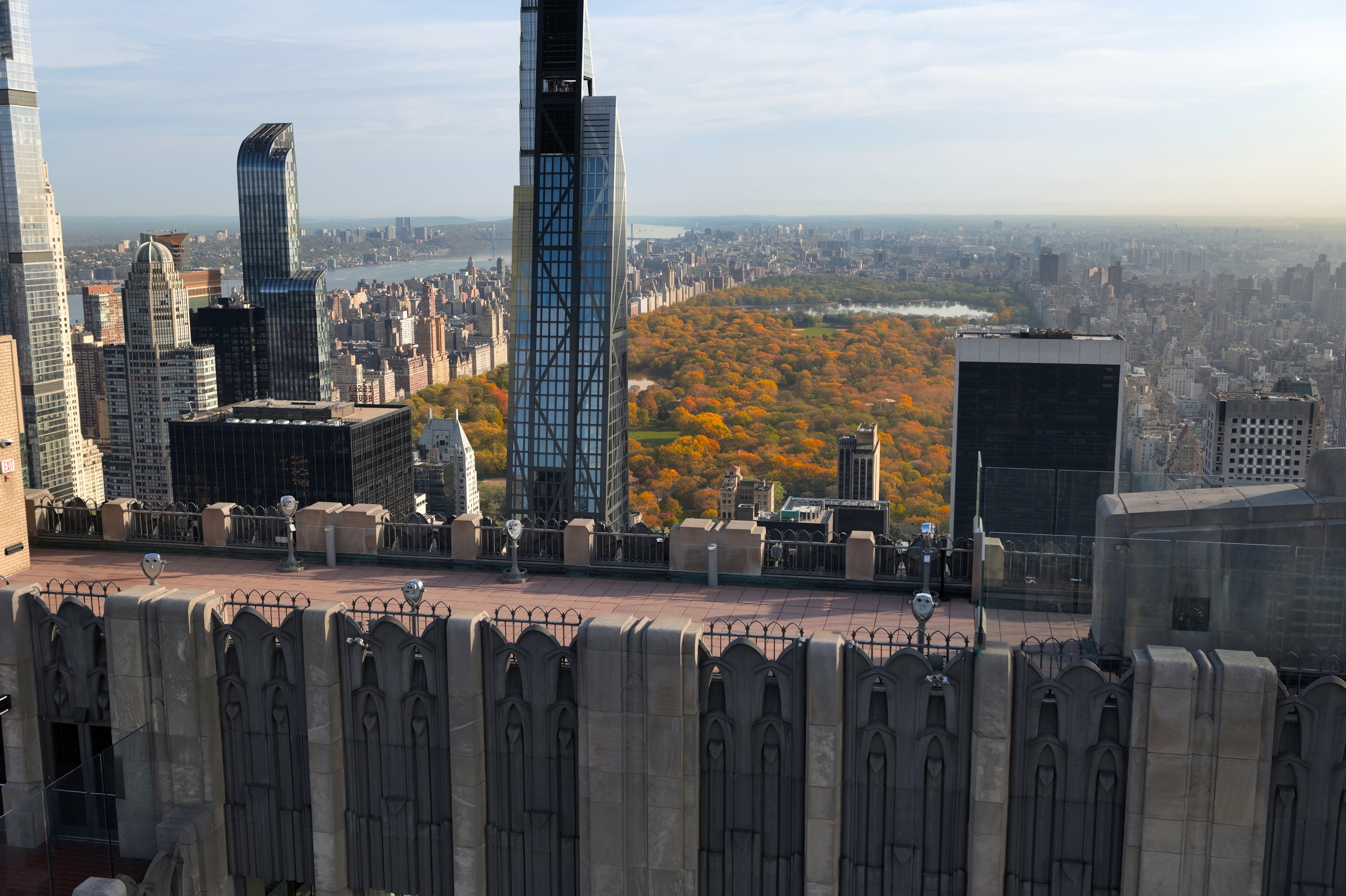
There is one thing you cannot get from inside the park, which is the shape of it. From 70 stories up at Top of the Rock, the canopy reads as a single unbroken block of orange and rust set into gray Midtown, with the reservoir cut into the middle. The deck faces straight north along the park’s spine, so the changing leaves are the view rather than a detail inside it.
Time it for the hour before sunset, when low light warms the canopy and the open-air level on top puts no glass between you and it. Most people head down once the sun is gone, which is the mistake: for about twenty minutes afterward the park goes deep blue while the buildings come on, and that is the better photograph.
Three More Places Worth the Trip
Prospect Park, Brooklyn.
The Ravine is the closest thing the city has to mountain forest: a wooded gorge with a stream running through it and the densest tree cover in Brooklyn. Sugar and red maples ring the lake and turn a little earlier than the rest of the park, which makes it a good early-season call.
The New York Botanical Garden, the Bronx.
The Thain Family Forest is 50 acres that were never cleared, the largest uncut piece of New York City’s original wooded landscape. Oak, beech, and sweet gum, and the sweet gums are the ones to look for: star-shaped leaves that turn purple and burgundy instead of the usual orange. Admission is ticketed, and the All-Garden Pass covers the forest. New York City residents can buy a cheaper grounds-access pass on site.
Fort Tryon Park, Manhattan.
The payoff up here is elevation. Linden Terrace, the high point of the park, looks west over the Hudson River to the Palisades, so you get a wall of copper and orange on the far bank with the water in front of it.
Make a Wednesday of It
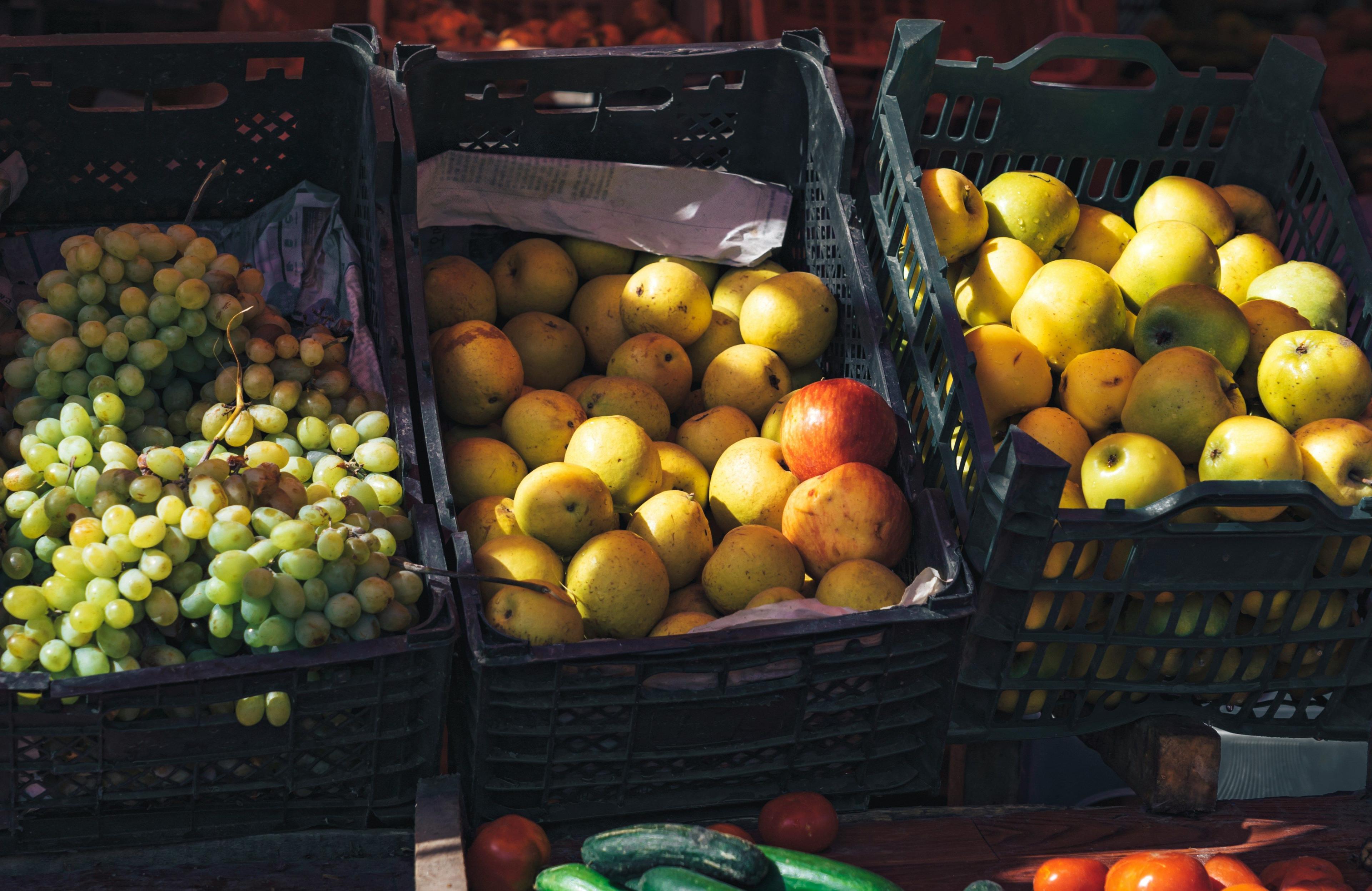
The Greenmarket at Rockefeller Center runs on North Plaza every Wednesday through the end of October from 8 a.m. to 5 p.m., which puts the last market day of the season inside peak week. Come September the tables turn over to the fall crop: apples out of Hudson Valley orchards, cider, winter squash, the last of the tomatoes. It is a working market for the neighborhood rather than a stop on a tour, which is why the produce is good.
Go in the morning. Vendors pack up early once they sell out, and you want to be walking north into the color with something in your hand anyway. Time it around a Wednesday trip to the New York Botanical Garden, when Grounds Admission is free all day for NYC residents and free for all other visitors between 10 and 11 a.m.
What to Know Before You Go
- Rain can end the peak leaf peeping season early. One hard storm can strip a canopy in a day, so once the color is up, don’t wait.
- Morning light works better for the Mall and Bow Bridge. Late afternoon works better from above.
- The middle of Manhattan turns last. If the leaf-peeping trackers say the outer boroughs have peaked, Central Park probably has a week left.
Frequently Asked Questions
When is peak fall foliage in NYC?
Late October into the first week of November in most years. The city runs two to four weeks behind upstate New York because buildings trap heat overnight and shade the parks by day, which delays the turn.
Where is the best place to see fall foliage in New York City?
Central Park, for range: the American elms on the Mall go yellow, the Ramble runs red and gold, and the Lake doubles all of it in the reflection. For the wide view of that same canopy, Top of the Rock looks straight north over the length of the park.
How long does peak color last in the city?
Roughly a week to ten days at full color, though it varies year to year. Rain and wind are the variables that matter, not temperature, so a wet week can end the season early.
Is it worth leaving the city to see fall foliage?
It can be, and the timing works in your favor. The Catskills and the Adirondacks are usually past peak by mid-October, but the Hudson Valley turns right about then, and Cold Spring, Beacon, and the Walkway Over the Hudson are all roughly ninety minutes north. Go up mid-month and you are still back for the city’s turn at the end of it.
Where can you see fall color in NYC for free?
Every city park here is free, including Prospect Park, Fort Tryon Park, and all of Central Park. The New York Botanical Garden is the one that charges admission, with one exception: the grounds are free on Wednesdays all day for NYC residents and everyone else from 10 a.m. to 11 a.m.
The window is short and the city is the last part of the state to get there. If you are in New York in the final week of October, the canopy is worth rearranging a weekend around.


