

Last updated: October 2026
The best things to do in New York City go far beyond a simple checklist. Start with panoramic skyline views from Top of the Rock, a skate at The Rink at Rockefeller Center, a walk across the Brooklyn Bridge, or a Broadway show. Then make time to wander neighborhoods like the West Village and DUMBO. Below are 25 standout experiences that capture both the city’s biggest icons and the everyday moments that make New York feel like New York.
New York has no off-season.
By late October, the parks start to turn and Sixth Avenue gets ready for the Halloween parade. November brings the marathon and the 100th Macy's Thanksgiving Day Parade. The list below will help you plan for whatever version of the city you encounter.
1. Walk Across the Brooklyn Bridge
Nothing else in the city delivers as much for free. The walk takes about thirty minutes at a normal pace, longer if you stop, and the payoff is the whole of Lower Manhattan rearranging itself in front of you as you go. The pedestrian promenade sits above the traffic.
Go early. By eleven in the morning, the deck is shoulder to shoulder, and the light is better before nine anyway. (There's a reason it's second on our list of the best photo spots in the city.) Start on the Brooklyn side and walk toward Manhattan if you want the skyline in front of you the entire time.
2. See the City from Top of the Rock
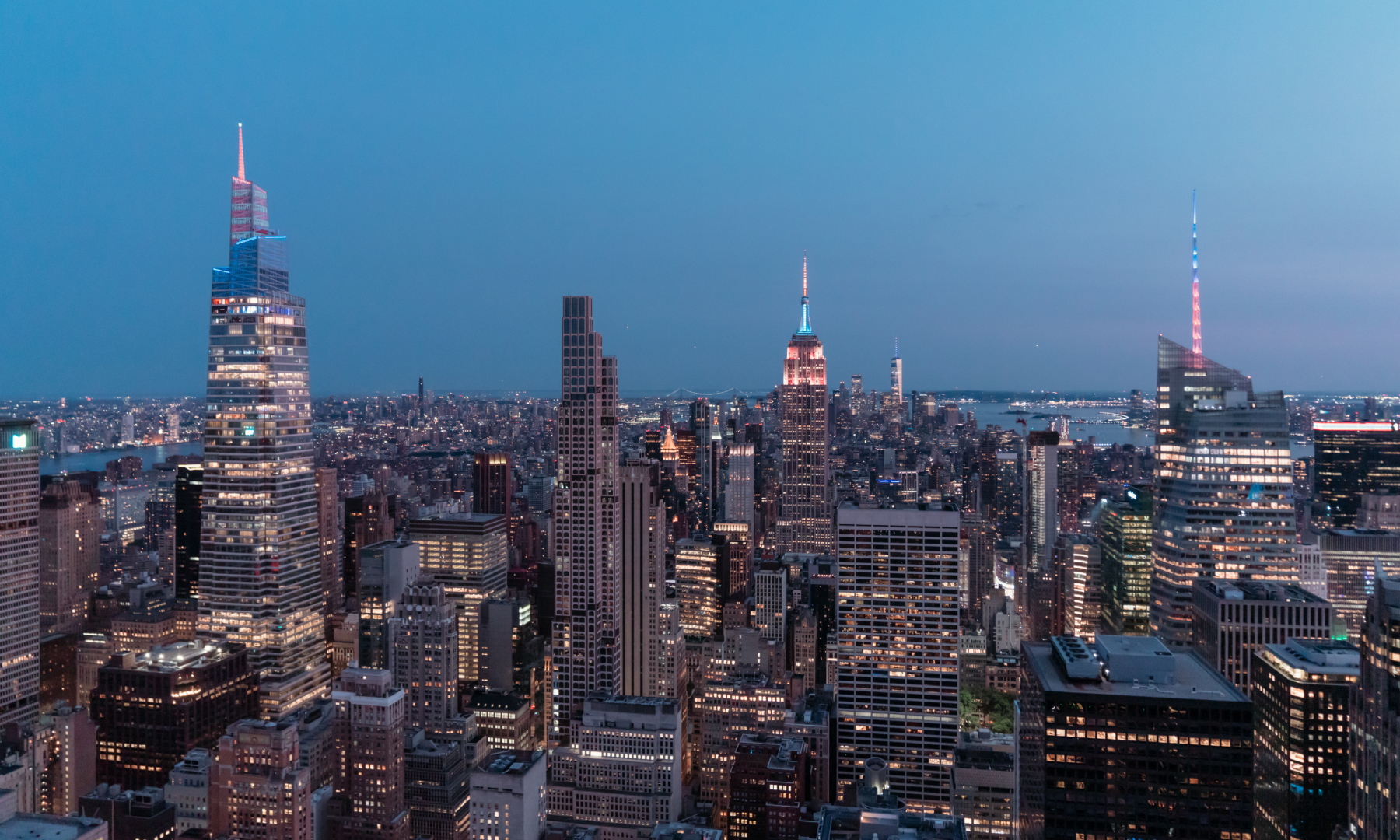
The view from Top of the Rock has been the city's reference point since 1933, and it earns its reputation for a specific reason: it looks at Manhattan rather than out from inside it. You get Central Park laid out to the north and the full run of the skyline to the south, from open-air terraces rather than through glass.
Two additions are worth the extra time. SKYLIFT Presented by Visa, raises a glass platform above the top deck for a few minutes of unobstructed sightline, and The Beam Experience seats you on a replica of the girder from the 1932 construction photograph, sixty-nine floors up. Book the last slot before sunset and stay through the change of light.
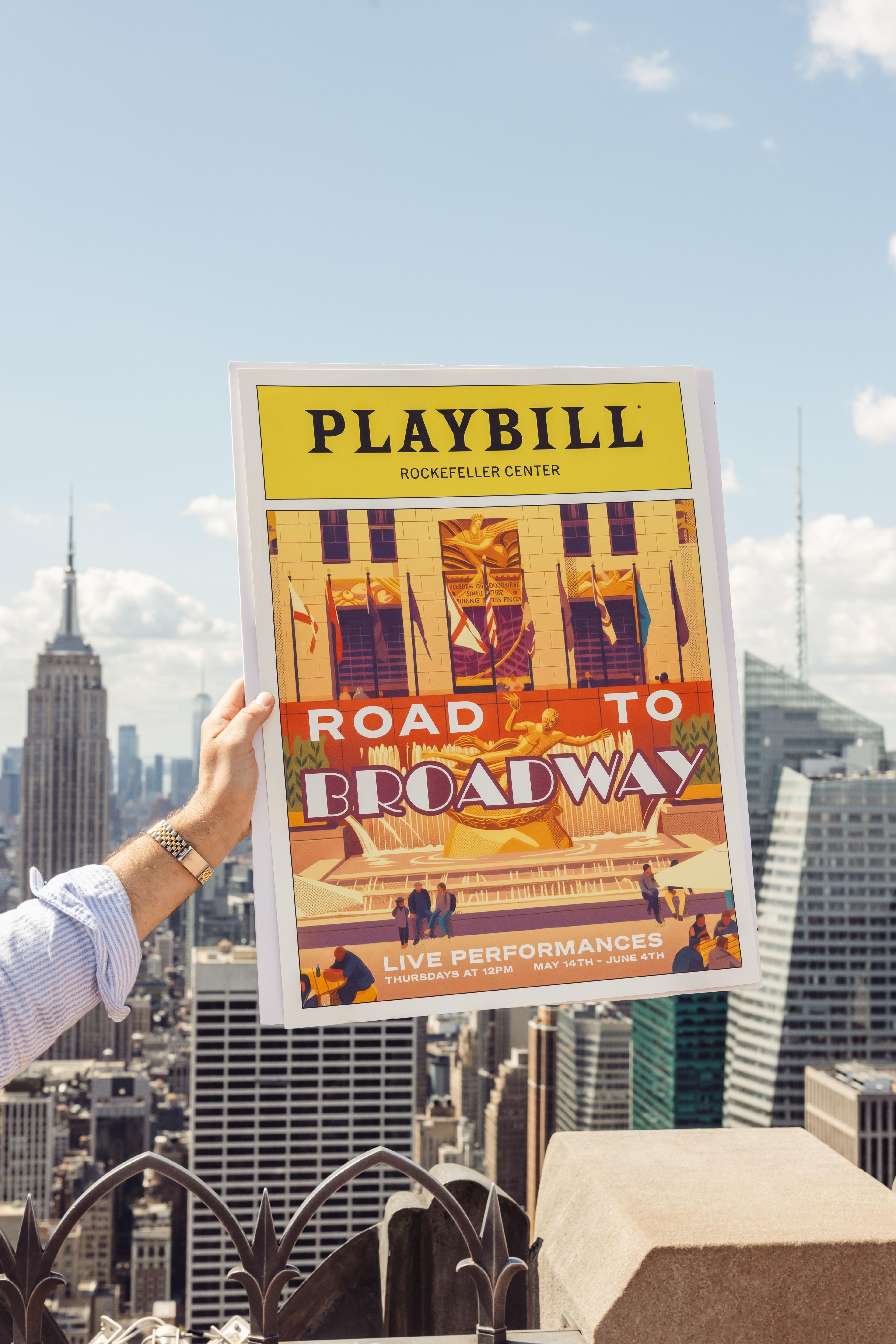
3. Catch a Broadway Show (and Dinner)
Broadway is the reason a lot of people visit New York City, and it holds up. The fall is the strongest window of the year: new productions open between September and November to position themselves for awards season, which means the slate is deepest right when the weather turns.
Same-day rush and lottery tickets are released by most productions in the morning and cost a fraction of face value. If you would rather not gamble, midweek evening performances are consistently the easiest to book and the least crowded. Book dinner early, too. Our list of the best places to eat before and after a Broadway show is a great place to start.
4. Explore Central Park
Central Park covers eight hundred and forty-three acres, and most visitors see the same twenty. The Ramble is the part worth going out of your way for: thirty-six acres of deliberately disorienting woodland in the middle of Manhattan, designed to make you forget which direction you came from.
From late October into early November, the park reaches peak color, and it is the only stretch of the year when the whole thing reads as one thing rather than a series of lawns. Rowboats run on the Lake through the warm months, and the Delacorte Theater stages free Shakespeare each summer.
5. Stand in the Standby Line for Saturday Night Live
Saturday Night Live has broadcast from Studio 8H at 30 Rock since 1975, and Season 52 premiered September 26, 2026, the show's earliest start in fourteen years. Most seats go through the lottery, which opens every August, so for this season, standby is the way in.
Standby now starts online. NBC opens a reservation form at 10 a.m. on the Thursday of show week, reservation holders line up at 30 Rock on Friday, and standby cards are handed out just after midnight. A card does not guarantee a seat, and the dress rehearsal is often the better show anyway. Not every Saturday is a show night, so check the schedule first. Standing in that line is practically a New York rite of passage on its own.
6. Give a Full Day to the Museums
The Metropolitan Museum of Art holds more than a million and a half works across two million square feet, which means the only wrong approach is trying to see all of it. Pick two wings. The Museum of Modern Art rotates its collection often enough that a repeat visit within a year rarely repeats itself, and the American Museum of Natural History remains the best argument in the city for bringing kids somewhere indoors.
Check what is closing before you go. The temporary shows are usually the reason a given month is worth the trip, and the good ones sell out their timed entry on weekends. If you decide to go, consider a Rock MoMA combo pass so you can visit two NYC favorites at a discount.
7. See the Statue of Liberty and Ellis Island
The ferry is the point as much as the destination. Crown access requires booking months in advance and involves a narrow spiral staircase of 162 steps, but pedestal tickets are easier to get and offer most of the view.
Ellis Island is the half that people skip and the half that lands hardest. Twelve million people passed through the Registry Room between 1892 and 1954, and the building has been left close enough to empty that the scale of it registers.
If you'd rather admire the Statue of Liberty from a distance, our list of the best places to watch the sunset has a few vantage points worth the trip.
8. Visit the 9/11 Memorial and Museum
Located in Lower Manhattan, the National September 11 Memorial & Museum is a powerful tribute at the former World Trade Center site. The two reflecting pools sit in the footprints of the original towers, ringed by the names of every person killed in the 1993 and 2001 attacks. The memorial plaza is free and open daily. The museum below is ticketed, and it can be an emotional visit. Budget two hours, and schedule something relaxing afterward.
9. Stroll the High Line
It is an abandoned freight line thirty feet above the West Side, converted into a mile and a half of planted walkway. It works because it is narrow and slow and gives you the neighborhood from an angle you cannot get from the sidewalk.
Enter at Gansevoort Street and walk north. It is busiest between noon and four on weekends, and the northern end above Hudson Yards is consistently the quietest stretch.
10. Catch a Game at Madison Square Garden
By October, the city's sports calendar moves indoors to the Garden. The Knicks opened their 2026–27 season on October 20, raising the franchise's first championship banner in 53 years. The Rangers share the arena through the same months, which means there is a game most nights. A weeknight game in November is the realistic way in, and even from the upper level, the Garden earns its reputation.
11. Spend a Fall Afternoon in the Bronx
The New York Botanical Garden covers 250 acres, and the part worth the trip in fall is the Thain Family Forest: 50 acres of the largest remaining old-growth forest in New York City. Color there peaks from late October into early November, about the same window as Central Park, and the garden runs seasonal programming through Halloween.
Afterward, walk to Arthur Avenue in Belmont. Many New Yorkers consider it the city's real Little Italy: bakeries, butchers, and red-sauce dining rooms, several of them family-run for generations. Go hungry, and bring cash for the market counters.
12. Wander Greenwich Village and Washington Square Park
The Village is the part of Manhattan that most rewards having no plan. The street grid breaks down, the buildings drop to four and five stories, and Washington Square Park runs as a continuous free performance most afternoons: chess hustlers, a piano someone rolled in, and a fountain full of people who did not intend to get wet.
Bleecker Street and the blocks around it hold the city's densest run of small record shops, bookstores, and jazz rooms, several of which have been in place since the 1950s.
13. See Fall Color at Fort Tryon Park and The Met Cloisters
The Met Cloisters sits atop Fort Tryon Park in Upper Manhattan, built around portions of five medieval European cloisters and opened as a branch of the Metropolitan Museum of Art in 1938. It exists because of John D. Rockefeller Jr., who funded the museum, created the park around it, and bought hundreds of acres of the New Jersey Palisades across the river so the view would never be built over.
That view is the reason to go in fall. From late October into November, the park's trees and the cliffs across the Hudson turn together, and the walk up through the Heather Garden deserves as much time as the galleries. Pick a clear weekday afternoon and stay for the sunset over the Palisades.
14. Walk Through Grand Central Terminal
Grand Central opened in 1913 and handles around 750,000 people on a weekday, which is roughly the population of Seattle moving through one building. The main concourse ceiling carries a zodiac mural that is, famously, painted backward.
Find the Whispering Gallery outside the Oyster Bar on the lower level: stand at one corner of the tiled arch, have someone stand at the opposite corner, and speak into the wall. It works.
15. Take a Food Tour of Chinatown
Manhattan's Chinatown is one of the largest Chinese communities in the Western Hemisphere, and it's not designed for tourists, which is exactly why it is worth your time. The good version of this is a short walk and four small stops rather than one long meal.
Look for soup dumplings, hand-pulled noodles, an egg tart from a bakery counter, and a bag of fruit from a Grand Street vendor. Bring cash.
16. Visit the Union Square Greenmarket
The Union Square Greenmarket began in 1976 with a handful of farmers and is now the flagship of the city's market network: at peak season, 140 regional farmers, fishers, and bakers set up along the north and west sides of the park. Fall is when it earns its reputation, with apples by the crate, fresh cider, squash, and armfuls of flowers from farms upstate and across the region.
It runs Mondays, Wednesdays, Fridays, and Saturdays year-round. Saturday morning is the full version of it: go early, talk to the farmers, and leave room in your bag. It's the kind of errand New Yorkers build a weekend around.
17. Watch the Village Halloween Parade
Every October 31, Sixth Avenue closes, and around two million people turn out for a parade that anyone in costume can simply join. It began in 1974 as a walk around a puppeteer's neighborhood and never quite got organized. In 2026, Halloween falls on a Saturday, so plan on the sidewalks filling early.
Watching is free. Marching is also free, which is the part people forget: line up in costume, and you are in it.
18. Cheer at the New York City Marathon
The TCS New York City Marathon runs Sunday, November 1, 2026, through all five boroughs, and this year marks the 50th anniversary of the five-borough course. It is the largest marathon in the world, with more than 59,000 finishers in 2025, and the spectating is as much the event as the running: the course turns ordinary residential blocks into the loudest places in the city for a few hours.
The Brooklyn stretch along Fourth Avenue is the best atmosphere. The last stretch through Central Park is where it gets emotional. If you're running, Top of the Rock is offering registered runners $26 Timed Admission tickets from October 30 through November 2, 2026, and the terraces are the place for a post-race skyline photo.
19. Watch the 100th Macy's Thanksgiving Day Parade
The Macy's Thanksgiving Day Parade has marched through Manhattan since 1924, and on Thursday, November 26, 2026, it reaches its 100th edition; three wartime cancellations are why the centennial lands now. The route runs down Central Park West from 77th Street, turns along Central Park South, then heads down Sixth Avenue past Radio City Music Hall to Herald Square.
Central Park West is the stretch worth staking out. Curb spots fill well before the 8:30 a.m. start, so dress for standing still in the cold. Balloon inflation the afternoon before, around the American Museum of Natural History, is the easier way to see them up close.
20. Visit Rockefeller Center
The Rink at Rockefeller Center has run below the plaza since 1936, and it’s one of the most recognizable sheets of ice in the country. It sits in a sunken courtyard surrounded by buildings, making skating on it feel like being inside the city rather than beside it. This is its 90th season, and weekday sessions early in the season are the quieter stretch on the ice.
Through the end of October, Fall at Rockefeller Center gives families a reason to make a morning of it: pumpkin painting, slime making, and other kids' activities at Top of the Rock on Sundays, free face painting there every weekend, and Art Production Fund's Art Sundae workshop with artist Kenny Scharf on the South Plaza on Saturdays. GrowNYC's Greenmarket sets up on Wednesdays for anyone shopping for the week.
Jupiter serves Italian food classics year-round at Rockefeller Center's Rink Level, which makes the whole thing a full evening rather than a photo stop. Read our ice skating guide before you go.
21. Take the Stage Door Tour at Radio City Music Hall
Radio City Music Hall opened in 1932 as the Art Deco centerpiece of Rockefeller Center, and with nearly 6,000 seats, it is still the largest indoor theater in the world. The Stage Door Tour is the way in without a show ticket: an hour behind the scenes that takes in the Great Stage, the Roxy Suite, an apartment built into the building for the hall's first impresario, and a meet-and-greet with a Rockette.
The hall sits on Sixth Avenue between 50th and 51st Streets, a block from The Rink, so a tour and a skate fit in the same afternoon. It's worth checking the concert calendar while you're there.
22. Step Inside the New York Public Library
The Stephen A. Schwarzman Building on Fifth Avenue at 42nd Street is guarded by its marble lions, Patience and Fortitude. Step inside for the Rose Main Reading Room: nearly 300 feet long, with 52-foot ceilings painted with clouds. The library also hosts free exhibitions and tours, and Bryant Park sits directly behind it, which makes it an easy pairing on a cool fall afternoon.
23. Shop Fifth Avenue and the Channel Gardens
Fifth Avenue in the upper 40s and 50s is flagship territory, and worth walking even if you buy nothing. The block to slow down on is between 49th and 50th Streets, where the Channel Gardens slope down from the avenue toward The Rink.
The shops along the gardens make a short, well-edited list: Aesop, Tiffany & Co., Ladurée, and Todd Snyder, with Alex Mill and the independent bookstore McNally Jackson close by. The plantings change with the seasons, so it's worth the walk even when you're only browsing.
24. Get Out to Brooklyn
DUMBO gives you the postcard shot of the Manhattan Bridge framed between warehouse buildings on Washington Street, and Brooklyn Bridge Park below it is one of the better waterfronts in the city. Brooklyn Heights, just uphill, has the Promenade and a run of nineteenth-century townhouses that survived because the neighborhood fought for them.
Further out, Williamsburg and Greenpoint hold the food and music that Manhattan prices out. Give it a full afternoon rather than an hour.
25. Get a Slice After Midnight
The last thing you do in New York should be the cheapest. Late-night slice shops are open past two in most of Manhattan and past four in parts of Brooklyn, and the standard is high enough that the bad ones do not survive.
Fold it lengthwise. Eat it standing up. It's a ritual.
If You Only Have a Weekend
Friday: an early dinner at Rockefeller Center, a Broadway show, then Top of the Rock after the curtain.
Saturday: Brooklyn Bridge early, coffee in DUMBO, the afternoon in a museum, the evening in the Village.
Sunday: Central Park in the morning, Chinatown for lunch, the High Line on the way out.
Free Things to Do in New York City
The city's best hours frequently cost nothing.
- The Brooklyn Bridge walk, at any hour
- The Staten Island Ferry, which passes the Statue of Liberty in both directions
- The 9/11 Memorial Plaza and its two reflecting pools
- The High Line, end to end
- The Village Halloween Parade, watching or marching
- The New York City Marathon, from the sidewalk in any of the five boroughs
- The 100th Macy's Thanksgiving Day Parade, from the curb along Central Park West or Sixth Avenue
- Central Park, including free Shakespeare at the Delacorte in summer
- The Rose Main Reading Room at the New York Public Library
Things to Do in New York City at Night
New York has a different demeanor after dark, and most of the list above changes character once the sun goes down.
Top of the Rock after sunset is a different experience from the daytime visit: the skyline reads as light rather than architecture. Broadway curtains go up around seven, and the blocks around the theaters are at their best in the half hour before. The Brooklyn Bridge is at its emptiest after eleven. The Village jazz rooms run late sets that start after most people have gone home. And the slice shops stay open for whatever is left of the night.
What to Know Before You Go
- Best months: September and October. The weather holds, the cultural calendar restarts, and the August crowds thin.
- Booking: Timed-entry attractions and marquee Broadway productions sell out on weekends. Book anything essential before you arrive.
- Getting around: Manhattan is more walkable than it looks. Twenty north-south blocks make a mile. For transit information, check the official MTA site.
- Tipping: Twenty percent is standard at restaurants and bars.
- Weather: September runs warm, October swings, and November turns cold quickly. Dress in layers and shoes you can walk eight miles in.
FAQs
What are the best free things to do in NYC?
Walking the Brooklyn Bridge, riding the Staten Island Ferry, and visiting the 9/11 Memorial plaza cost nothing and are among the best hours in the city.
What's the best view of the Empire State Building?
Rockefeller Center's Top of the Rock. Because the building itself is part of the Manhattan skyline, the best view of it is from a vantage point that puts it in the frame rather than under your feet. The open-air terraces at the top of the tower look south across the full run of Manhattan.
What is the best time of year to visit New York City?
September and October are the strongest stretch: mild weather, a cultural calendar that restarts after summer, and thinner crowds than August. Late April through early June is another good window. December has the best atmosphere and the most difficult logistics.
How many days do you need to see New York City?
Three to four days will cover the major landmarks without rushing. A weekend works if you stay in one or two neighborhoods rather than trying to cross the city twice a day.
What are the best things to do in NYC with kids?
The American Museum of Natural History, the Central Park playgrounds and carousel, the Staten Island Ferry, and skating at The Rink at Rockefeller Center during the ice season. The Macy's Thanksgiving Day Parade balloon inflation, held the afternoon before the parade, is easier with children than the parade itself. If it sounds like a lot, just borrow our itinerary for a day with kids in NYC.
New York in the fall moves fast. It's worth planning a little, then leaving room for the rest.


