

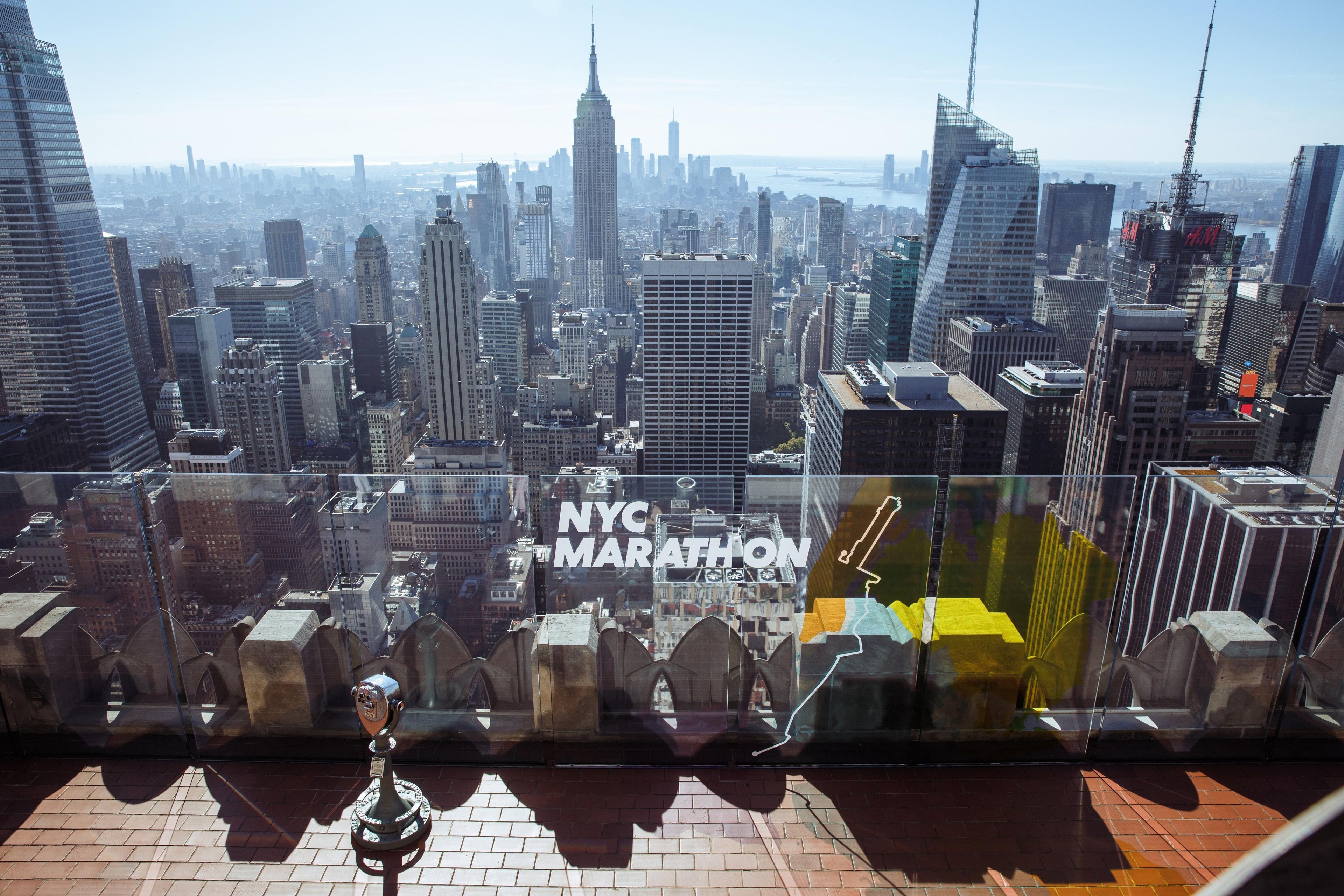
For one Sunday every November, the whole city turns out to watch strangers run through it.
The TCS New York City Marathon is the only day of the year when all five boroughs are stitched into a single 26.2-mile line, and the crowd along that line is as much the event as the race is. More than 55,000 runners finish in Central Park, and something like 2 million people come out to watch them do it. Watching well takes a little planning: the course is long, the roads close early, and the difference between a great morning and a frustrating one usually comes down to picking the right corner. Below is the date, the route borough by borough, and where to stand.
End the day at Top of The Rock for an iconic post-race skyline photo, where Rockefeller Center is offering registered runners $26 Timed Admission tickets from October 30 through November 2, 2026.
For a weekly rundown of what's opening and worth showing up for, sign up for The Center Newsletter.
When the 2026 New York City Marathon Happens
The race is scheduled for the first Sunday in November each year, which is a useful thing to know a year out if you are planning a trip around it.
Runners do not all leave at once. New York Road Runners, the club that has organized the race since 1970, sends the field off in waves across the morning, starting with the wheelchair and handcycle divisions, then the professional women, then the professional men, then the general field in staggered groups. The practical effect for a spectator is that the race arrives at any given point on the course as a long, thickening river rather than a single pack. The fastest runners pass early; the bulk of the field comes through the middle of the day; the last finishers are still coming in after dark.
That spread is the single most important thing to understand before you pick a spot. If you are there to see one specific person, you need a rough sense of their pace and their wave, or you will stand in the right place at the wrong hour.
The Route, Borough by Borough
The course starts on Staten Island and ends in Central Park, and it touches every borough in between. It is one of the Abbott World Marathon Majors, and the largest of them. NYRR publishes the official course map and the street closures each year, and it is worth checking those before race morning rather than assuming last year’s closures hold.
Staten Island to Brooklyn
Runners gather at the start village in Fort Wadsworth, and the starting line sits at the Staten Island foot of the Verrazzano-Narrows Bridge. The bridge is the first two miles and the biggest climb of the day, roughly 150 feet up, and it is closed to spectators. This is the one stretch of the marathon nobody watches from the side, which is part of why the noise on the far end hits so hard.
Brooklyn
Brooklyn holds the longest share of the course, roughly miles 2 through 13. Runners come off the bridge onto Fourth Avenue and settle in for a long, flat, straight run through Bay Ridge, Sunset Park, and Park Slope. Around mile 8, the course turns onto Lafayette Avenue and cuts through Fort Greene and Clinton Hill, then swings north through Bedford-Stuyvesant and Williamsburg before reaching Greenpoint.
This is where the marathon feels most like a street party. Bands set up on corners, sound systems appear in doorways, and the sidewalks stay full for hours.
Queens
The Pulaski Bridge carries runners into Long Island City right at the halfway mark, and like the other bridges on the course, it is closed to spectators. Queens is a short stretch, a quick loop through Long Island City before the course turns onto the Queensboro Bridge at mile 15.
The Queensboro is the quietest hard mile of the day. It is another long climb, it is closed to spectators, and runners describe the mile as eerily quiet after 13 miles of noise. Anyone who has run New York remembers it.
Manhattan and the Bronx
Coming off the bridge, the course turns north onto First Avenue, and the contrast is the most famous moment in the race. The avenue is wide, straight, and lined with people for dozens of blocks. Runners often describe it as a wall of sound, and plenty of them make the mistake of speeding up here.
At mile 20, the course crosses the Willis Avenue Bridge into the Bronx for about a mile and a half of Mott Haven, the shortest borough stretch of the day, then returns to Manhattan over the Madison Avenue Bridge. From there, it comes down Fifth Avenue along the park’s eastern side. The stretch from 110th Street down to 90th is a steady uphill, and it arrives at exactly the point in a marathon where legs stop cooperating. It is the hardest part of the course.
Runners enter Central Park at 90th Street, run down East Drive past the Metropolitan Museum of Art, exit onto Central Park South around mile 25, run west to Columbus Circle, then turn back into the park for the last stretch to the finish line just past Tavern on the Green.
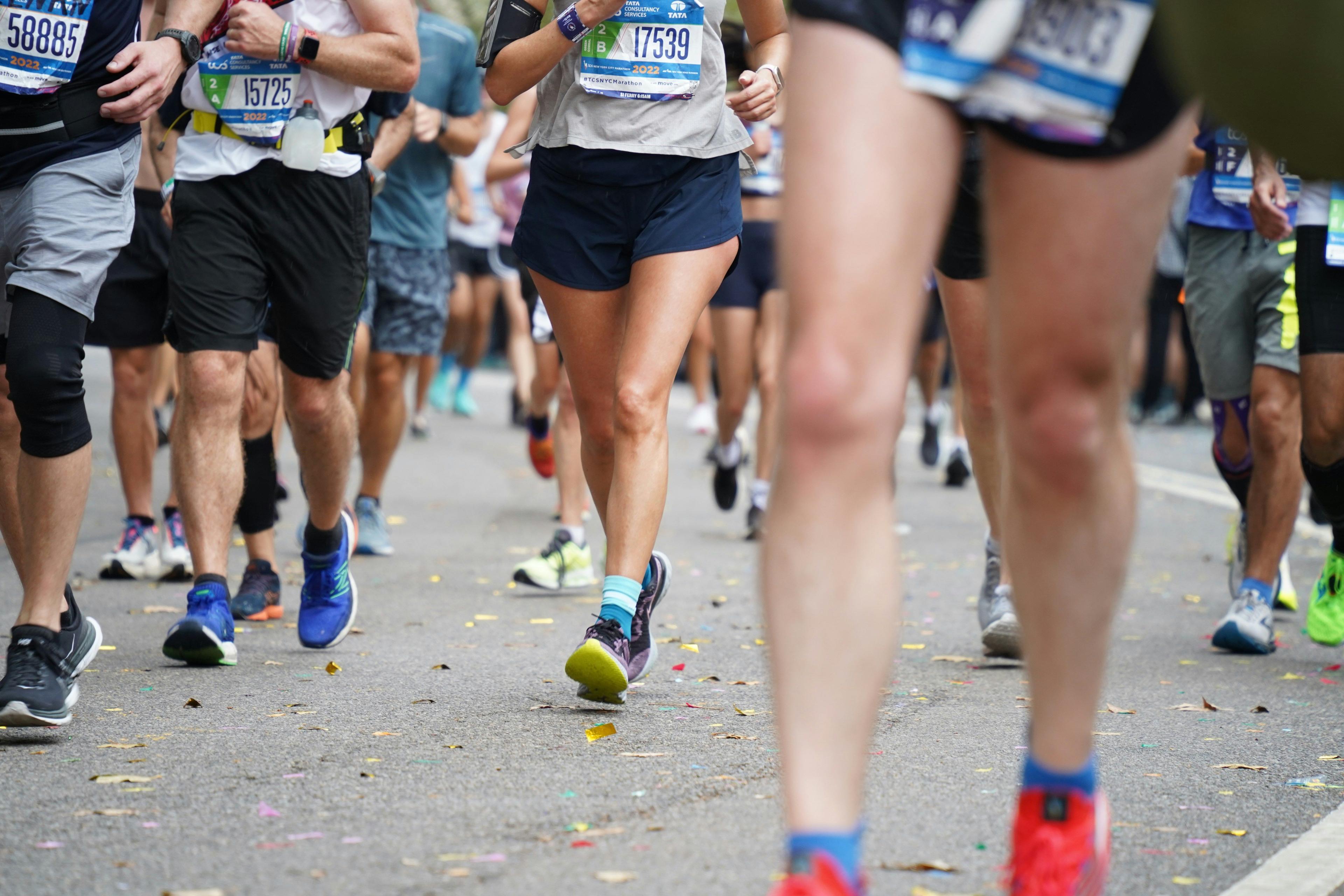
The Best Places to Watch
Different spots give you completely different mornings. Pick based on what you want out of the day.
Fourth Avenue, Brooklyn (miles 3 to 7).
The best place to see the field while it is still a field. Runners are fresh, packed tight, and running fast, and the avenue is wide enough that you can usually get to the curb. Good for a first-timer who wants to understand the scale of the thing.
Lafayette Avenue, Fort Greene (mile 8).
Widely considered the best atmosphere on the course. Brownstone blocks, deep crowds, live music, and enough cafes nearby that you can get a coffee without losing your spot for good.
Bedford Avenue, Williamsburg (miles 11 to 12).
Loud, young, and relentlessly festive. The course narrows here compared with Fourth Avenue, so the noise concentrates.
Vernon Boulevard, Long Island City (mile 14).
The underrated pick. Because the Pulaski Bridge is closed to spectators and the course only passes through for a couple of miles, crowds thin out considerably. If you want to actually be heard by the person you came for, this is the place to do it.
First Avenue, Upper East Side (miles 17 to 19).
The loudest place on the course, and the one most spectators picture when they imagine watching the marathon. The tradeoff is that it is packed, and getting to the barricade takes patience.
Fifth Avenue, 110th to 90th Streets (miles 22 to 23).
The most useful cheering you can do all day. This is the uphill grind; the crowds are thinner, and the runners coming past you are struggling. A familiar voice matters more at mile 22 than anywhere else on the course.
Central Park South (mile 25).
The last full mile, with the finish close enough to smell. Runners are spent and elated at the same time, which makes for the best photographs of the day.
The finish line itself is a different matter. Access inside the park is controlled, grandstand seating is sold in advance through New York Road Runners, and any free viewing area is capped once it fills. Check the official spectator information for the current year before you build a plan around seeing the finish, and treat Central Park South as the reliable version of that moment.
How to See Your Runner Twice
The shape of the course makes doubling up easy, and it is the move most experienced spectators use.
The cleanest version is First Avenue, and then Central Park South. Watch your runner head north somewhere in the 90s, then cut west across Manhattan on foot while they run up into the Bronx and back down the east side of the park. You get roughly an hour, which is enough time to walk across and find a place on Central Park South before they come through at mile 25.
A Brooklyn version is possible, but tight. You have to leave Fourth Avenue the moment your runner passes, and move fast toward Bedford Avenue for the miles 11 to 12 stretch; a slower runner is what makes it work.
Two things make this work. Track your runner in the official race app rather than guessing, and plan your crossing on foot. Marathon Sunday closes a long list of streets, and walking is very often faster than any alternative.
Where to Regroup After the Finish
Nobody plans the part after the finish, and it is the part that most reliably goes wrong. Runners come out of Central Park cold, stiff, and starving, the blocks around the park are shoulder to shoulder, and every restaurant within sight of the finish has an hour wait.
Walking south helps more than people expect. Rockefeller Center sits about 10 blocks below the Central Park South stretch, which puts it far enough from the finish crowd to be functional and close enough to reach on tired legs. Plenty of the restaurants and bars at Rockefeller Center take walk-ins on a Sunday afternoon, which is more than you can say for anything backed up against the park, and there is somewhere indoors to sit while somebody changes out of a foil blanket.
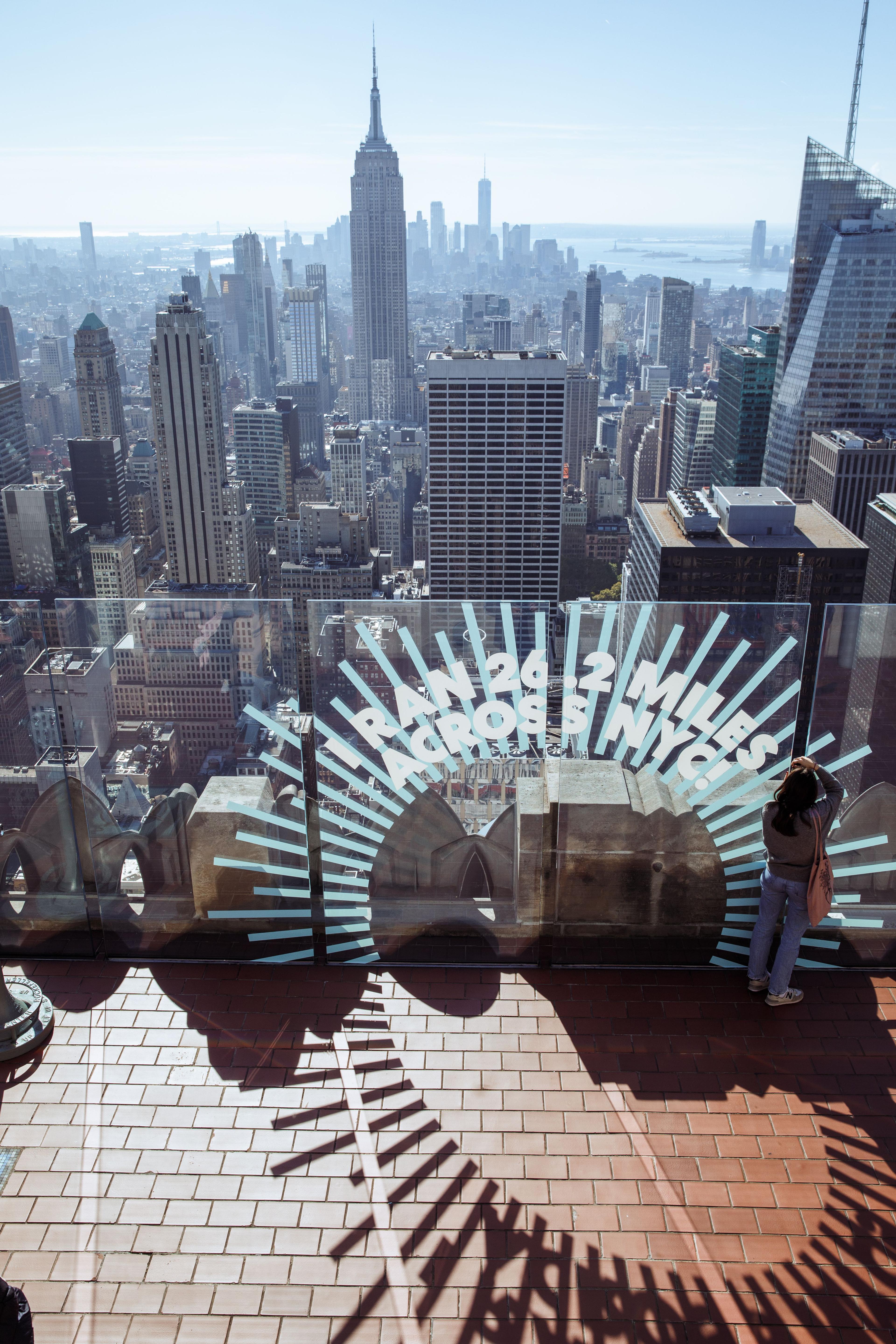
If you have fans who would prefer not to spend six hours on a curb, this is an easy place for them to wait out the middle of the day. Pro tip: meet up at Top of the Rock to take some photos with your medal.
What to Know Before You Go
- Check the official NYRR street closure list before race morning. The course cuts the city in half, and the closures start early.
- Clocks fall back the same morning, so you get an extra hour of sleep and lose the afternoon light. Sunset lands in the late afternoon.
- Bring layers and something to stand on. Early November mornings are cold, and you will be still for hours.
- Write your runner’s name in large letters. They are scanning thousands of faces and will not spot yours.
- Cell service degrades badly in the biggest crowds. Agree on a meeting point in advance rather than relying on texting.
- Nothing about the day rewards driving. Plan to be on foot once you are near the course.
Frequently Asked Questions
When is the 2026 New York City Marathon?
Sunday, November 1, 2026. The race is scheduled for the first Sunday in November each year, and the field starts in waves across the morning rather than all at once.
What is the NYC Marathon route?
It starts at Fort Wadsworth on Staten Island, crosses the Verrazzano-Narrows Bridge into Brooklyn, runs north through Brooklyn to Greenpoint, crosses the Pulaski Bridge into Queens, takes the Queensboro Bridge into Manhattan, runs up First Avenue, dips into the Bronx, then comes down Fifth Avenue and into Central Park to finish just past Tavern on the Green.
Where is the best place to watch the New York City Marathon?
It depends on what you want. First Avenue in Manhattan is the loudest and most electric. Fifth Avenue between 110th and 90th Streets is where your cheering does the most good, because it is uphill and thinly crowded. Central Park South at mile 25 captures the feeling of the final stretch.
Can you watch the finish line for free?
Not dependably. Reserved grandstand seats are sold in advance through New York Road Runners. The closest reliable free view of the final stretch is Central Park South.
How long does it take runners to finish?
The open winners come in between two and two-and-a-half hours. Most of the field takes between three and six hours, and the last finishers come in well after dark. If you are waiting on one person, look up their expected pace and starting wave before you decide when to show up.
The marathon is the one day New York agrees to spend a Sunday cheering for people it has never met. Find a corner and stay longer than you planned to.


