

A beautiful room, a well-made cocktail and a toast at the right moment will never go out of style. But the companies planning events today are asking a further question: what will guests actually do while they're here?
It's a meaningful shift. An event is often one of the few times a year a team, or a client list, is together in one place, and companies increasingly want that evening to do more than mark the date. They want guests talking about it in the office the next morning, and sharing it before they even get home.
That's the thinking behind experiential events: evenings built around something to do, see or taste, in a setting that gives the experience its atmosphere. Here's why it's happening, and how to plan an experiential corporate event in New York City.
What Companies Mean by "Experiential"
An experiential event is one where guests do something, rather than simply attend something.
That can be as elaborate as a branded installation or as simple as a chef cooking in front of the room. The common thread is participation: guests are part of the evening rather than an audience for it. Skating, tastings, live performance, hands-on stations, interactive art, guided experiences within a landmark building: all of it turns a passive guest list into an active one.
The shift is happening for a few practical reasons.
Attendance has to be earned. As hybrid and remote work become more common, event organizers need to give guests a compelling reason to gather in person. Interactive experiences provide that incentive, transforming a traditional event into something guests actively want to attend.
Companies want the event to do more. A corporate event is often one of the few times a year a team, or a client list, is in one room. Experiences create conversation and shared memory in a way a seated dinner and a slideshow are rarely capable of doing.
Events live on afterward. Guests photograph and post what feels distinctive. Organic exposure extends the event's reach beyond those in attendance, creating additional opportunities for brand awareness, engagement, and lasting impressions. Whether the audience is employees, clients, or press, these shared moments help amplify the event's impact long after the evening concludes.
Expectations have changed. Consumer culture has trained everyone to expect immersive dining, pop-ups and brand activations. Guests notice when a venue has been chosen with intent, and when the evening has been designed rather than simply booked.
Start With a Setting That Does Half the Work
The easiest way to make an event feel like an experience is to hold it somewhere guests could not otherwise go.
A venue with a story, a view or an unexpected location gives an evening its atmosphere before a single element of programming is added. Guests arrive already engaged, and the room becomes part of what they remember.
Rainbow Room is the clearest example: an Art Deco landmark on the 65th floor of 30 Rockefeller Plaza, with sweeping views across Manhattan and a dance floor at its center. For a client gala or a milestone celebration, the arrival alone sets the tone, with capacity for 450 guests at a reception or 320 seated.
Radio Park, a half-acre rooftop garden on the 9th floor of 50 Rockefeller Plaza, sits directly above Radio City Music Hall. Few guests expect a garden in the middle of Midtown, which is exactly what makes it memorable. It holds 300 for a reception and 175 seated.
620 Loft & Garden pairs a historic garden and reflective pool with views of St. Patrick's Cathedral, while 610 Loft & Garden looks out over Rockefeller Plaza from above Fifth Avenue. Both combine an indoor loft with outdoor space, which gives an evening two distinct chapters rather than one room.
For brand activations in particular, a distinctive setting does double duty: it shapes the guest experience and it shapes every image that comes out of the event.
Put an Activity at the Center of the Evening
The most direct way to turn a party into an experience is to give guests something to do together.
An activity changes the shape of an event. It breaks up the usual clusters of people who already know each other, it gives colleagues something to talk about beyond work, and it creates the photographs guests actually want to take.
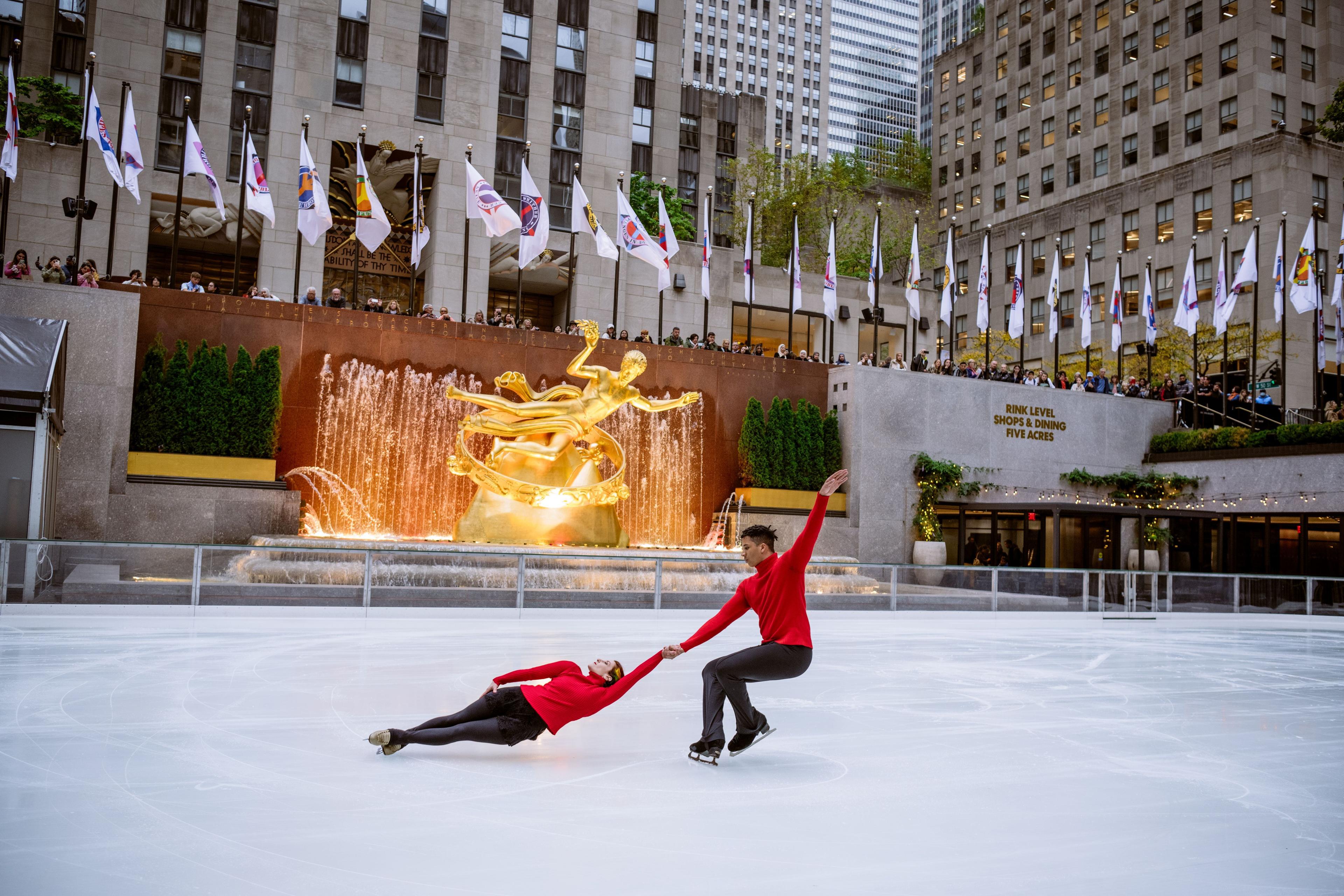
At Rockefeller Center, The Rink is the clearest expression of that idea. From October through March, one of New York's best-known winter traditions can be booked privately, with up to 220 skaters on the ice and events expanding to as many as 2,500 guests when additional spaces in the Under 30 Concourse are included.
It also works as one part of a longer evening rather than the whole of it: skating first, then cocktails and dinner in a private space upstairs. Guests who would rather watch than skate still get the experience of being at the center of Rockefeller Center on a winter night.
The principle applies well beyond the ice. A tasting led by a sommelier, a live performance, a hands-on workshop or a guided tour of a landmark building all serve the same purpose: they give the evening a spine.
Treat Food and Drink as Part of the Experience
Catering is often where an experiential event quietly reverts to a conventional one.
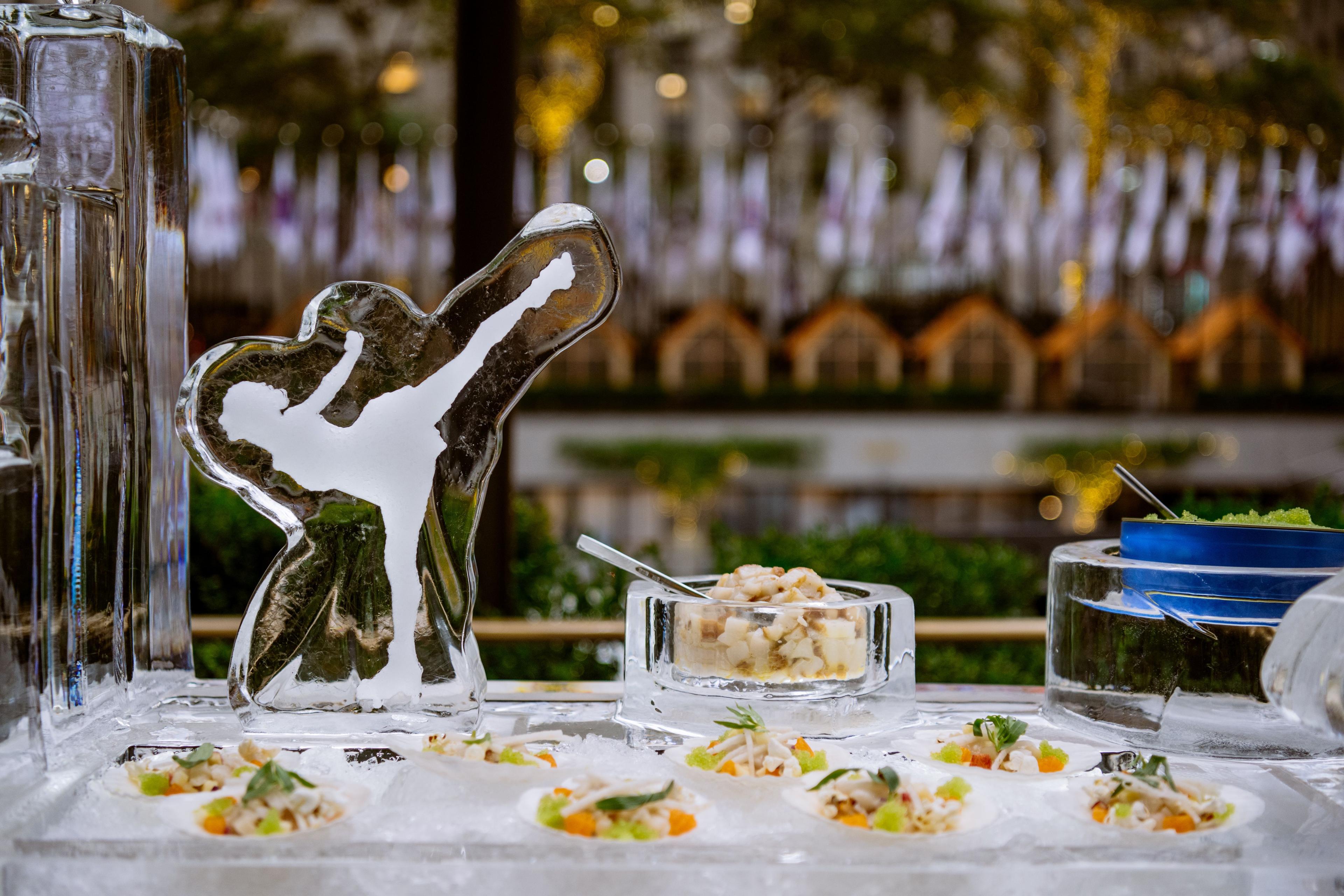
A well-executed menu feeds people beautifully. A chef finishing a dish in front of guests, a cocktail built to order, a tasting flight compared across a table, or a dessert moment timed to the view at dusk does something else: it gives guests a reason to gather and a story to repeat.
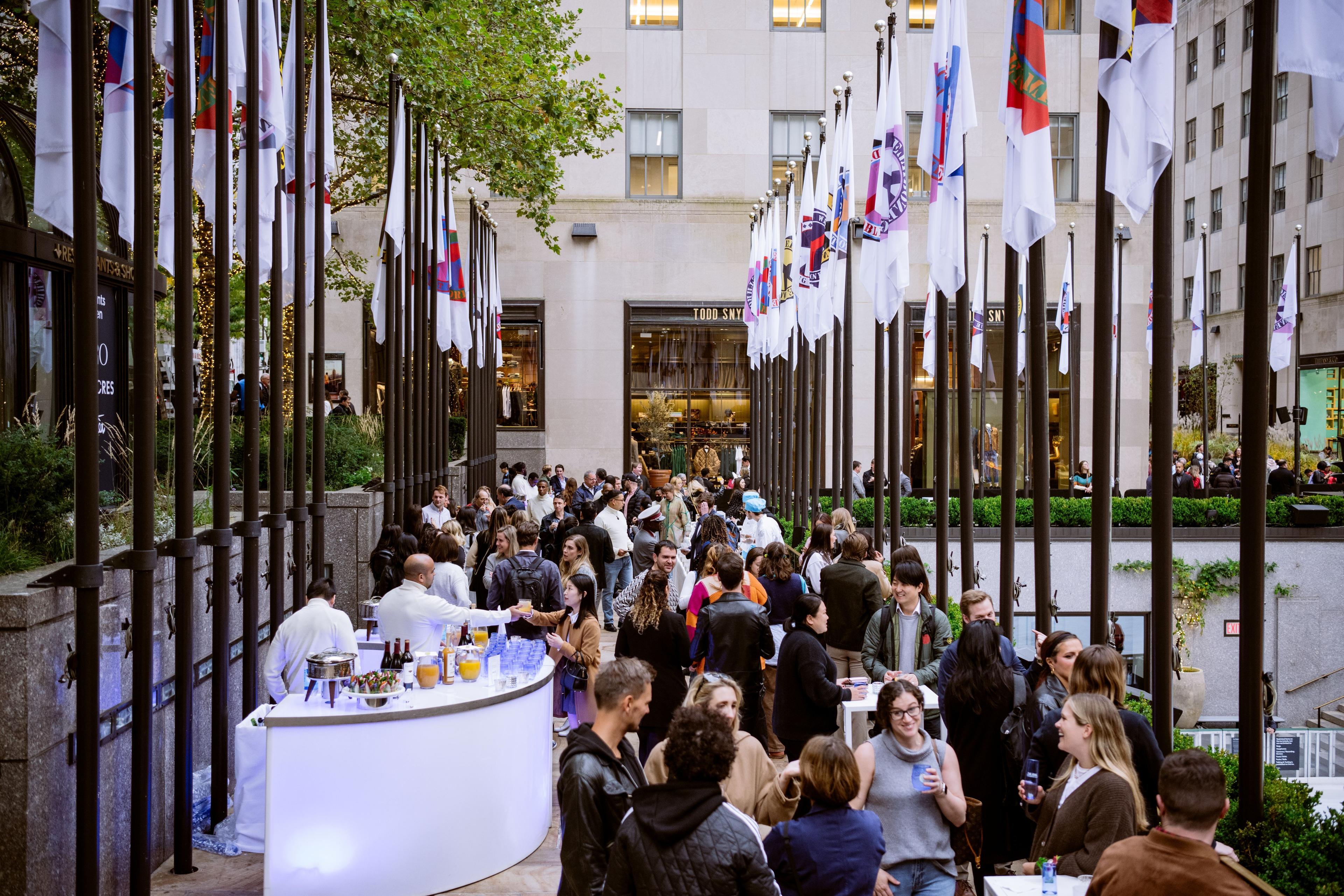
Format matters as much as the menu. Stations keep a room moving and mixing, which suits client events and team celebrations. A seated dinner concentrates attention, which suits a program with a message at its center. Many of the best experiential events use both, moving guests from one to the other as the evening progresses.
Program Moments, Not an Agenda
The difference between a well-run event and a memorable one usually comes down to two or three deliberate moments.
That might be a short, genuinely good speech timed to sunset rather than buried mid-dinner. It might be a performance that begins without announcement, a reveal tied to a product, an award presented in front of the skyline, or simply the moment a room steps outside into a rooftop garden.
A few principles help:
- Build the evening around one high point rather than five competing ones.
- Keep speeches short and schedule them when guests are most attentive, usually early rather than late.
- Use the venue itself as the reveal where you can: a view, a door opening, a change of space.
- Leave unstructured time. Experiences need room to breathe, and the conversations afterward are part of the value.
Design for Lasting Impact
The most successful experiential events create value that extends well beyond the time guests spend together. That impact starts with intentional planning around what attendees will remember, share, and associate with the experience.
Think about what people will photograph, what they'll describe to a colleague who didn't attend, and what the company wants associated with the evening. That may mean considering sightlines and lighting at the planning stage, creating one visually distinctive element, or making sure the setting is visible in the images rather than lost behind a stage.
It's also worth deciding in advance how success will be judged: attendance and RSVP conversion, qualitative feedback, client meetings booked afterward, employee engagement, media and social coverage. Experiential events are easier to justify in a budget conversation when the goal is defined before the event, not after.
How to Plan an Experiential Corporate Event
If you're moving away from the traditional format for the first time, a few questions make the planning easier:
- What should guests leave with? A feeling, a message, a relationship, a memory. Decide this before anything else.
- What will they do? Identify the one activity or moment the evening is built around.
- Where does the setting help? Choose a venue that contributes atmosphere rather than one you have to decorate into relevance.
- How will guests move? Map arrival, the main moment and the exit, and give the evening a shape.
- What's the contingency? Outdoor and activity-based elements need a plan B that still feels intentional.
- How will you measure it? Agree the markers of success with your stakeholders in advance.
One caution: experiential does not mean complicated. The most effective events usually do one distinctive thing well, rather than three things adequately.
Create an Experience at Rockefeller Center
From private skating at The Rink to a rooftop garden above Radio City Music Hall and an Art Deco landmark 65 floors above Midtown, Rockefeller Center offers settings where a corporate event becomes something guests remember.
Ready to start planning? Explore Rockefeller Center's private event venues or contact our events team to find the right space for your next event.
Frequently Asked Questions About Experiential Corporate Events in NYC
What is an experiential corporate event?
An experiential corporate event is built around participation rather than attendance. Instead of a standard reception or seated dinner, guests take part in something: an activity, a tasting, a performance, an installation or an experience tied to the venue itself.
What are some experiential corporate event ideas in NYC?
Ideas include private ice skating, chef-led tastings and interactive food stations, live performance, rooftop receptions timed to sunset, branded installations and guided experiences inside landmark buildings.
Can you book The Rink at Rockefeller Center for a private corporate event?
Yes. The Rink at Rockefeller Center is available for private events from October through March and can accommodate up to 220 skaters on the ice, with events expanding to as many as 2,500 guests when additional spaces in the Under 30 Concourse are included.
Which Rockefeller Center venues work best for brand activations?
It depends on the audience and scale. Radio Park offers a half-acre rooftop garden for up to 300 guests at a reception, Rainbow Room provides a landmark setting for up to 450, and 610 and 620 Loft & Garden combine indoor and outdoor space for more intimate activations.
Are experiential events more expensive than traditional corporate parties?
Not necessarily. Budget depends on scale, programming and production rather than on format. A single well-chosen experience in a venue that already provides atmosphere often costs less than extensive production in a neutral space.


