

There's no shortage of itineraries for New York City. Travel guides, ranked roundups, and neighborhood-by-neighborhood breakdowns abound. Most of them cover the same ground.
What they miss is the texture: the way a morning at the Met feels different from an afternoon, the reason the walk from the High Line to the Whitney makes more sense than driving, and what it actually takes to see Times Square without feeling like you lost something in the process.
This guide covers the essential experiences, plus underrated ones and cultural moments that make 2026 a particularly good year to be in Manhattan. Knowing where to go, and how to move between them, is most of what makes the difference.
1. Top of the Rock at Rockefeller Center
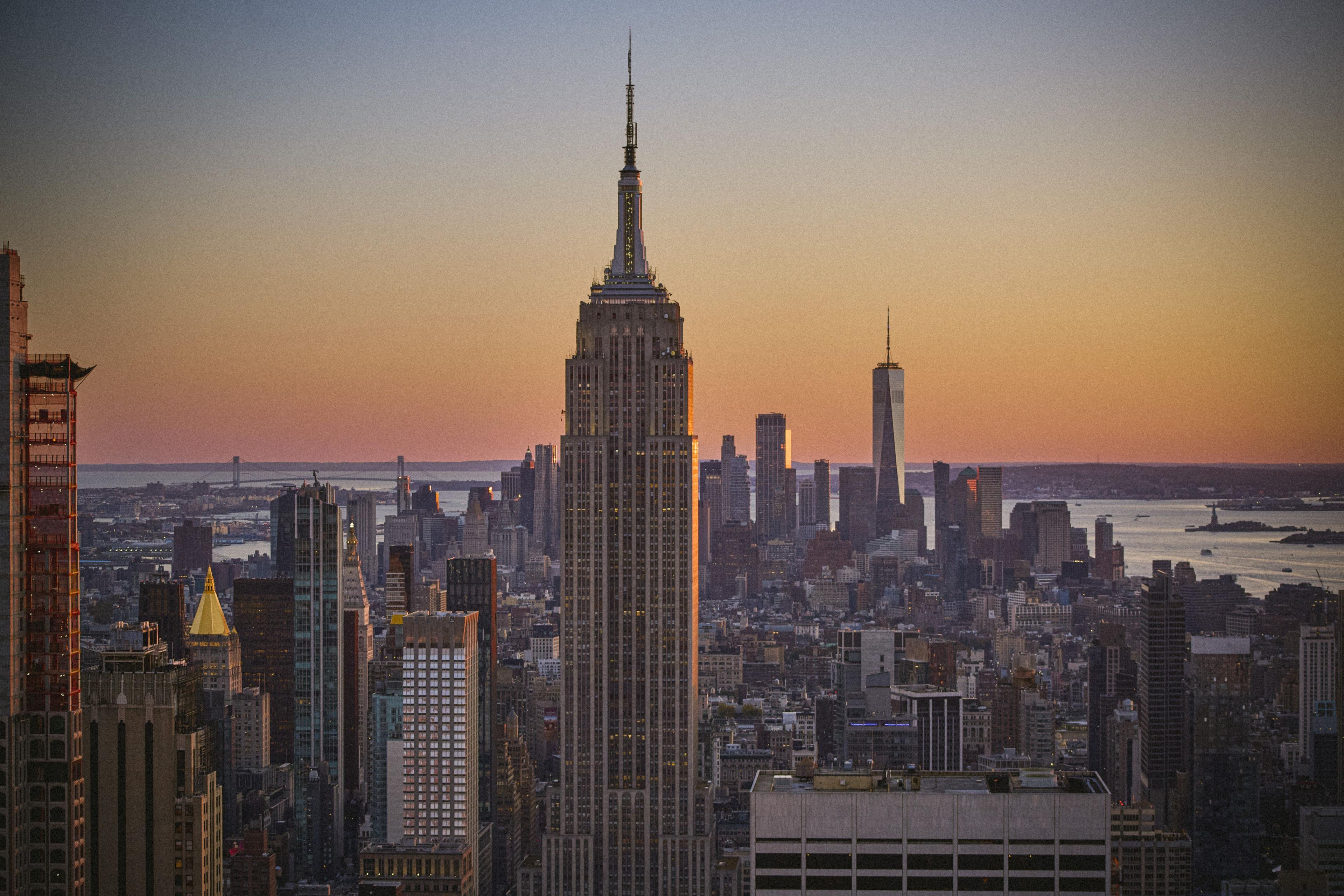
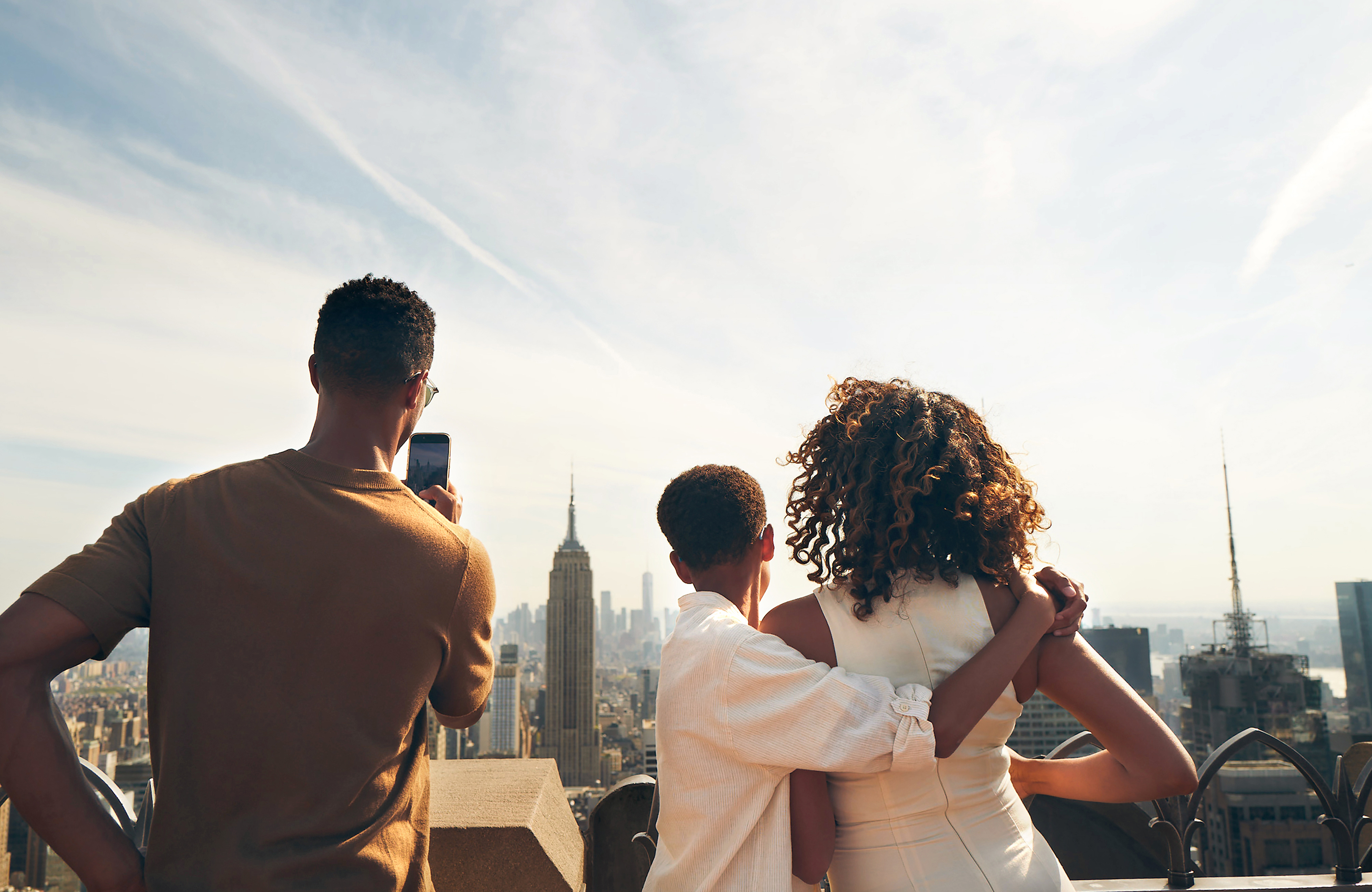
The observation deck at 30 Rockefeller Plaza is one of the most iconic skyline vantage points in New York City, and the argument is easy to make. Top of the Rock offers a view of Manhattan that can’t be beat. Central Park stretches north, the Hudson and East Rivers frame the island on both sides, and on clear days the view extends well into Brooklyn, Queens, and beyond. For an extra boost, take a ride on SKYLIFT for an unobstructed, 360-degree panoramic view, 900 feet above street level.
2. Central Park
Central Park runs through the middle of Manhattan, providing a breath of fresh air and a sense of wonder at its scale. The park earns its reputation in every season: the Reservoir loop, the Bethesda Terrace and Fountain, the Ramble's quieter woodland paths, and the Sheep Meadow's open expanse all reward different paces and different moods. In summer 2026, Free Shakespeare in the Park returns to the revitalized Delacorte Theater with two productions: "Romeo & Juliet" (May 22-June 28) and "The Winter's Tale" (July 25-August 23). Tickets are free and distributed by lottery through the Public Theater's website.
3. The Metropolitan Museum of Art
The Met, at 1000 Fifth Avenue on the Upper East Side, is one of the largest and most encyclopedic art museums in the world, with a permanent collection spanning 5,000 years across more than two million objects. A first visit barely scratches the surface here: the Egyptian Temple of Dendur, the European paintings galleries, the American wing's period rooms, and the rooftop sculpture garden each justify their own separate line on your to-do list. In 2026, the Costume Institute's spring exhibition, "Costume Art," pairs historic garments with works from across the collection, treating fashion as art history rather than spectacle. Don’t be surprised if you find yourself making plans for your next visit before you’ve even left the grounds.
4. The High Line
The High Line runs 1.45 miles along a former elevated freight rail line on Manhattan's West Side, from Gansevoort Street in the Meatpacking District north to 34th Street near the Javits Center. It's one of the more successful pieces of urban infrastructure in recent American city-building: a linear park threading through Chelsea and Hell's Kitchen that offers art installations, planted landscapes, and views into the surrounding neighborhood fabric at a height that changes how the city looks. Art installations are embedded throughout and rotate regularly. The High Line is free and open to the public, typically from 7 a.m. to 10 p.m., and makes a good alternative to a walking tour if you’d rather stroll at your own pace.
5. The Whitney Museum of American Art
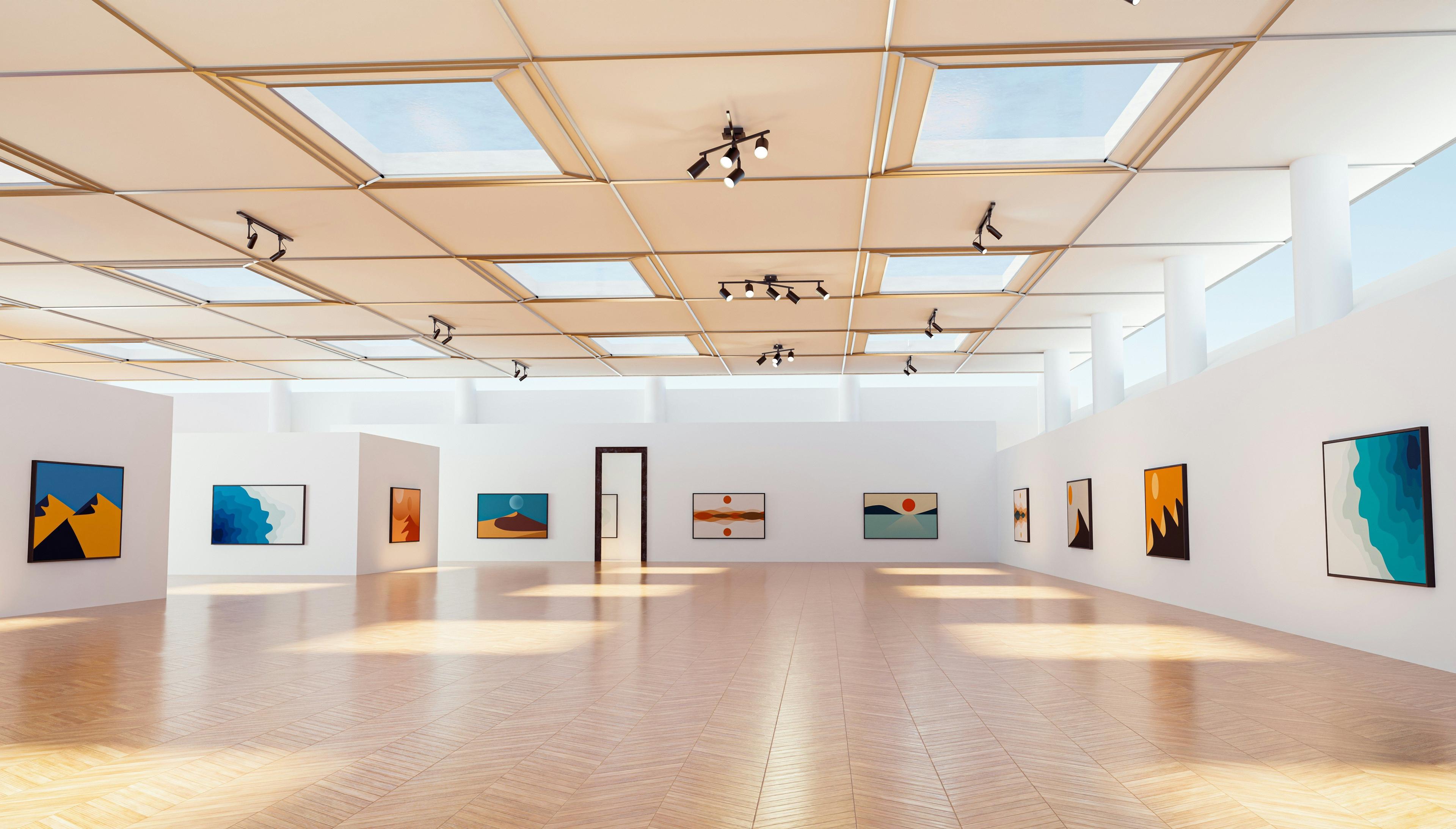
The Whitney is the natural starting point for American art from the 20th century to the present, and in 2026 it's running the 82nd Whitney Biennial through August 23. The Biennial is the essential contemporary-art event of the year: a survey of where American art currently is, curated with the kind of institutional seriousness that makes it worth returning to more than once. The building's terraces also offer some of the most quietly impressive views of the Hudson River and the downtown skyline available.
6. The Museum of Modern Art
MoMA holds one of the defining collections of modern and contemporary art anywhere in the world. Van Gogh's "The Starry Night," Picasso's "Les Demoiselles d'Avignon," Warhol, Pollock, Rothko: the permanent collection covers the last 130 years of art history with breadth and depth that rewards both the first-time visitor and the returning New Yorker. The building itself, redesigned by Diller Scofidio + Renfro and Gensler and reopened in 2019, has generous, well-proportioned galleries that shape the experience with maximum impact.
7. Times Square
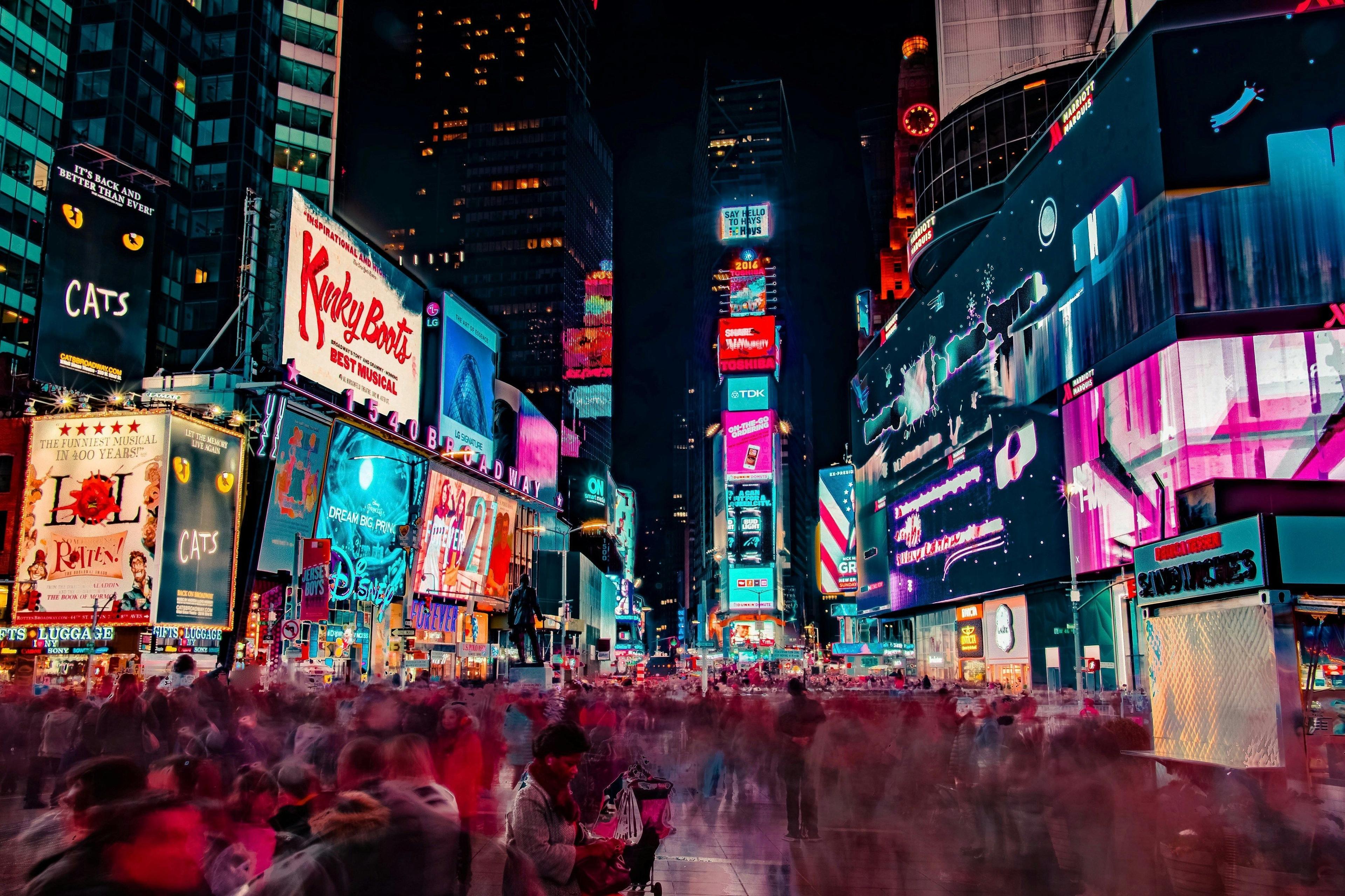
Times Square is one of those bright, colorful fun things that’s worth seeing at least once, occupying a space on any prototypical NYC itinerary. The stretch of Broadway between 42nd and 47th Streets in Midtown is one of the most heavily visited intersections in the world, and the density, scale, and 24-hour brightness combine to create an urban phenomenon. The best time to experience it is either very early in the morning (before 8 a.m., when it's relatively empty and the light is soft) or late at night, when the full theater of the place is operating and the lights shine in full force.
8. Broadway Shows
Manhattan's theater district contains 41 Broadway houses operating under the Broadway League designation. If you’re all-in on an NYC theme, "Ragtime" at Lincoln Center Theater has been extended through early August; it weaves the city's own history into its text. Whether you’re seeking serious drama or the full production impact of a classic musical, you’ll find what you’re looking for on this storied stretch. Don’t forget to make dinner reservations; Rockefeller Center offers some of the best dishes in walking distance.
9. The 9/11 Memorial and Museum
The 9/11 Memorial's two reflecting pools occupy the footprints of the original World Trade Center towers at 180 Greenwich Street in Lower Manhattan. Each pool is ringed with the names of nearly 3,000 people killed in the attacks of Sept. 11, 2001, and Feb. 26, 1993. The adjacent museum, which opens below grade, tells the history of those events with care and without evasion. It is one of the most sober and important institutions in the city. Set aside a full morning or afternoon; the combination of the outdoor memorial and the museum is a lot to process quickly.
10. The Frick Collection
The award-winning Frick Collection returned to its renovated home at 1 East 70th Street on Fifth Avenue in 2024 after a five-year renovation, and it remains one of Manhattan's most distinctive museum experiences. The scale is intimate, the light in the garden court has been restored, and the collection of Old Master paintings, porcelain, and decorative arts is displayed with the kind of density and care that larger institutions can't replicate. First Fridays, offered most months, provide free evening admission. The collection is open Tuesday through Sunday.
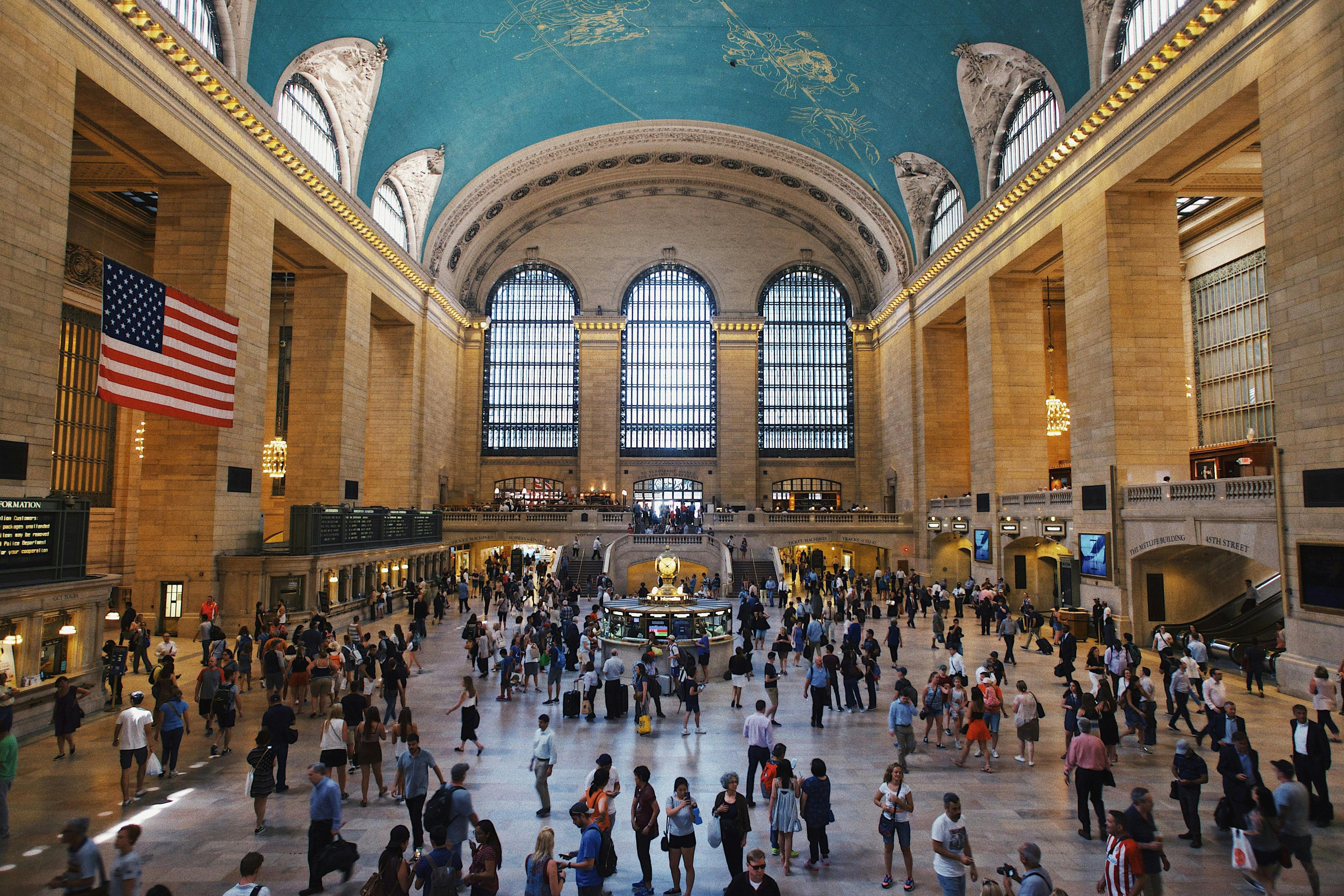
11. Grand Central Terminal
Grand Central Terminal is one of the most architecturally significant public spaces in America, and it functions as a working commuter hub serving more than 750,000 people on a typical weekday. The Main Concourse, with its 125-foot-high vaulted ceiling painted with a constellation mural, is worth a deliberate visit separate from any transit purpose. The Vanderbilt Hall events space, the lower-level dining concourse, and the exterior Beaux-Arts facade along 42nd Street are each worth slowing down for. If you want to dive all the way in, free architectural tours are offered by the Municipal Art Society on Fridays at 12:30 p.m.
12. The New York Public Library
The Stephen A. Schwarzman Building of the New York Public Library is a Beaux-Arts landmark completed in 1911 and one of the finest public buildings in the city. The Rose Main Reading Room, with its 78-foot-high painted ceiling and long oak tables, is open to the public and free to enter. The building also holds rotating exhibitions drawn from the library's research collections. It is the kind of place that rewards a longer visit than most people allow it, and it is immediately adjacent to Bryant Park, which makes the combination an easy and excellent midday option.
13. Bryant Park
Bryant Park sits behind the New York Public Library, just off Sixth Avenue in Midtown. It is a genuinely well-programmed public space: the lawn is open in summer, the cafe tables fill early on good weather days, and the surrounding location gives it an unusual sense of enclosure for an outdoor park in the middle of the city. The Bryant Park Picnic Performances series runs May 28 through September 11 in 2026, with free music, dance, circus, and theater performances on the lawn most evenings.
14. The American Museum of Natural History
The American Museum of Natural History occupies a full city block on the Upper West Side, and its permanent collection covers 45 halls of natural history, anthropology, and science. The Hall of Ocean Life, with its 94-foot blue whale suspended from the ceiling, and the Rose Center for Earth and Space, housed in a glass cube with a sphere at its center, are the two spaces worth building a visit around. Fancy some stargazing? The Hayden Planetarium, inside the Rose Center, runs ticketed shows throughout the day.
15. Lincoln Center
Lincoln Center for the Performing Arts occupies a 16-acre campus at Broadway and 65th Street on the Upper West Side, and it is the largest performing arts center in the world, housing the Metropolitan Opera, New York City Ballet, the New York Philharmonic, the Film Society, the School of American Ballet, and several other resident organizations. In summer 2026, the campus runs Summer for the City (June 10-August 8), with hundreds of free and pay-what-you-wish events. The fall season begins Sept. 22, with New York City Ballet opening in Balanchine's "Jewels" and the Metropolitan Opera launching its season the same week.
16. The Studio Museum in Harlem
The Studio Museum in Harlem has helped define the conversation around contemporary Black art for more than five decades. The museum is running "Fade" through Sept. 6, 2026, featuring 17 early-career artists of African and Afro-Latinx descent in an exhibition that represents one of the most important Harlem art stops of the year. Stop in on Sundays for free admission.
17. Washington Square Park
Washington Square Park is the civic center of Greenwich Village, anchored at the south end of Fifth Avenue by its 1892 marble arch. The fountain circle at the park's center fills with students, musicians, chess players, and people watching other people, and it has operated as a gathering point for the neighborhood since the 19th century. The park is surrounded by New York University's campus, the streets of the West Village, and some of the best restaurant blocks in lower Manhattan. It is a short walk from the High Line, SoHo, and the blocks of the East Village that The Village Trip festival (Sept. 25-Oct. 4) celebrates with music, literature, and performance.
18. Harlem
Harlem is one of Manhattan’s most historically layered and culturally rich neighborhoods. The Apollo Theater has been a landmark of American music since 1934; its Wednesday Amateur Night is still running and completely worth attending. Brush up on your history at the Studio Museum on 125th Street, then take a refreshing stroll through Marcus Garvey Park on the East Harlem side. For an authentically Harlem meal, Sylvia's Restaurant, at 328 Lenox Avenue, has been a neighborhood institution since 1962. Jazz buffs will want to mark their calendars for Sept. 17-19, when Lincoln Center runs a Harlem-connected series with Wynton Marsalis.
19. Chinatown and the Financial District
Lower Manhattan, below Chambers Street, holds two of the city's most historically dense neighborhoods in close proximity. Chinatown, centered on Canal and Mott Streets, has been a continuous community since the 1870s and remains one of the most vital urban Chinatowns in the United States. The streets are dense with produce markets, dim sum restaurants, and bakeries, and the neighborhood is best explored on foot without a specific destination. A short walk south brings you into the Financial District, where the canyon of Wall Street, the Neoclassical facade of Federal Hall, and the East River waterfront are all within a few blocks of each other.
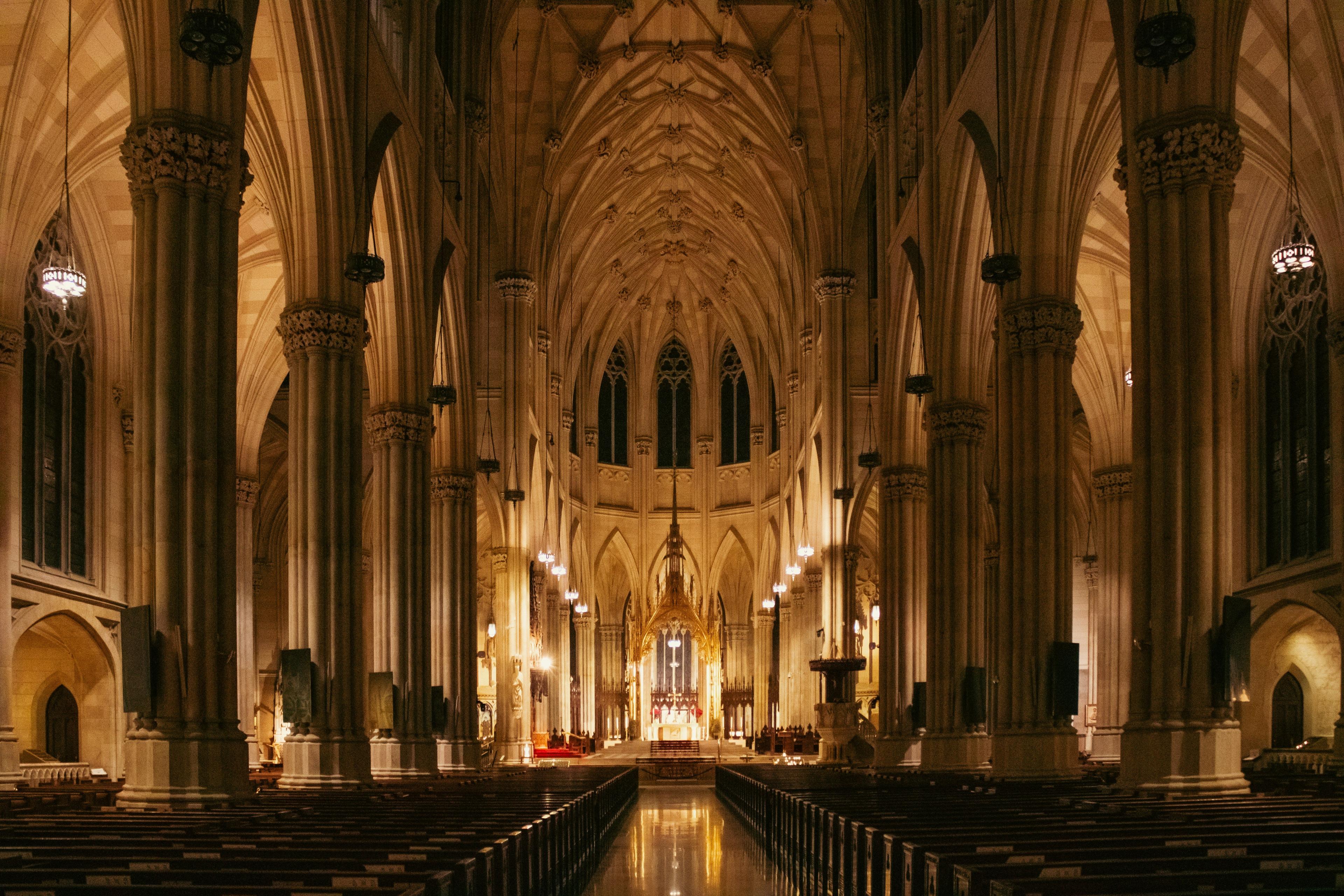
20. St. Patrick's Cathedral
It’s no mystery why famed Gothic Revival landmark St. Patrick's Cathedral, completed in 1879, is one of the most visited churches in the United States. The interior, with its 330-foot nave, stained glass windows, and bronze altar doors, represents world-class ecclesiastical architecture at a scale more typically associated with European cobblestone streets. It is directly across Fifth Avenue from Rockefeller Center and free to enter during open hours. Sunday masses draw large congregations; visiting on a weekday morning offers a quieter experience for those looking to appreciate the building itself.
21. The Statue of Liberty and Ellis Island
The Statue of Liberty is unmissable in New York Harbor. If you want to get up close and personal, you’ll need to plan ahead. Accessible by ferry, the statue draws visitors from all over the world, so tickets sell out weeks in advance. The crown holds only a small number of visitors per day, and the climb is 354 stairs with no elevator. Ellis Island, a short additional ferry ride away, holds the National Museum of Immigration, documenting the more than 12 million people who passed through between 1892 and 1954. The combination of the two islands is best planned as a complete half-day trek. If you don’t need to step onto the island itself, a free alternative to see the Statue of Liberty is to take the Staten Island ferry. Its route passes by for a view of the landmark.
22. The Armory Show and New York's Fall Art Season
For a specific window in late September, Manhattan becomes a serious contender for the center of the contemporary art market. The Armory Show runs Sept. 24-27 at the Javits Center, at 429 11th Avenue, with major international galleries presenting modern and contemporary work across a fair of real critical mass. It opens a fall art season that draws dealers, collectors, curators, and serious viewers to the city for several weeks.
What to Know Before You Go
- Most major museums suggest or require timed-entry tickets booked in advance. The Met, MoMA, the Whitney, and the 9/11 Museum all benefit from pre-booking, especially on weekends.
- The Statue of Liberty crown and pedestal tickets sell out weeks ahead. Book as early as possible.
- Many of Manhattan's best cultural experiences are free: Shakespeare in the Park, the High Line, Bryant Park Picnic Performances, the Lincoln Center Summer for the City series, and the outdoor memorial at the World Trade Center all cost nothing to attend.
- Rush tickets and lotteries are available for most Broadway shows. Check each production's official website; the TKTS booth at 47th Street and Broadway sells same-day discounted tickets from 3 p.m. on performance days.
Frequently Asked Questions
What are the best things to do in Manhattan on a first trip?
On a first trip to New York City, the Top of the Rock observation deck covers the most essential ground. the combination of Central Park, the Met or MoMA, a Broadway show, a walk across the Brooklyn Bridge
How many days do you need in Manhattan?
Four to five days gives you enough time to move at a reasonable pace without feeling rushed. A long weekend of three days is workable if you're selective. A week allows you to go deeper into individual neighborhoods.
Is Manhattan walkable?
Manhattan is among the most walkable major cities in the United States, and walking is often the best way to understand how the borough is organized. The numbered grid above 14th Street makes navigation intuitive. Below 14th Street, the street plan becomes irregular, but the distances between most lower Manhattan destinations remain manageable on foot. Good walking shoes matter considerably.
What is the best observation deck in New York City?
Top of the Rock at Rockefeller Center is widely considered the best observation deck in the city for views of the Manhattan skyline, because it places you at the center of Midtown looking south toward the Empire State Building and north toward Central Park.
Are there free things to do in Manhattan?
Yes. Free options include Central Park, the High Line, the Statue of Liberty's outdoor grounds (ferry ticket required), the 9/11 Memorial's outdoor pools, the New York Public Library's reading rooms and exhibitions, Bryant Park, Washington Square Park, and a large portion of the Lincoln Center Summer for the City programming. The Staten Island Ferry provides free round-trip service with some of the best views of the Manhattan skyline and harbor available anywhere.
What neighborhood is best for a first-time visitor to stay in?
Midtown Manhattan, particularly the areas around 30th-50th Streets on the East or West Side, puts a first-time visitor within walking distance or a short subway ride of most major attractions. The Upper West Side is quieter and residential, with easy access to Lincoln Center, the American Museum of Natural History, and Central Park. Both are reasonable bases; the subway connects them quickly.
What's worth seeing in Manhattan in 2026 specifically?
Several exhibitions and events make 2026 a notable year to visit. The Whitney Biennial runs through Aug. 23 at the Whitney Museum. The Costume Institute's "Costume Art" exhibition at the Met is open through January 2027. Free Shakespeare in the Park returns to the restored Delacorte Theater in Central Park. Gustavo Dudamel opens his tenure as music director of the New York Philharmonic on Sept. 10 at Radio City Music Hall. And the Tribeca Festival marks its 25th anniversary with its June 3-14 edition in Lower Manhattan.


